
On September 6, 2026, South Korean business media reported a decision with long reach across the power industry: the European Union has agreed in principle to restrict, from 2032, the use of fluorinated greenhouse gases with a global warming potential (GWP) of 1 or higher in high-voltage switchgear above 145 kV. That covers sulfur hexafluoride (SF6), the standard insulating and arc-quenching gas in high-voltage switchgear for six decades — and a gas whose GWP is roughly 25,200 times that of CO2. Within days of the EU news, HD Hyundai Electric, Hyosung Heavy Industries and LS Electric were all in the press with SF6-free gas-insulated switchgear (GIS) product lines aimed at the European market.
For engineers who build the components of the electrical grid, the interesting detail is what sits inside SF6-free high-voltage switchgear: a vacuum interrupter. And a vacuum interrupter is, in essence, a bellows-sealed machine — which makes this regulatory shift a quiet growth story for edge welded bellows technology.
Why SF6 Is Being Phased Out of Switchgear
SF6 became the workhorse of electrical switchgear because it is chemically stable, non-flammable and an extraordinary insulator — roughly three times better than air at withstanding voltage stress, with superior arc-quenching ability. The problem is leakage: SF6 released into the atmosphere stays there for more than 3,000 years, and its greenhouse impact is extreme. Industry studies estimate that a few percent of installed SF6 volume escapes each year through seals, maintenance and disposal, making electrical equipment one of the largest controllable sources of this gas.
Regulators have responded in stages. The EU’s fluorinated-gas regulation has progressively restricted SF6 use in medium-voltage equipment — where manufacturers largely replaced it with vacuum switching beginning more than a decade ago — and the 2032 restriction for high-voltage switchgear above 145 kV reported this week extends the same logic up the voltage ladder. Korea’s switchgear makers, already strong in vacuum circuit breaker technology, are positioning SF6-free high-voltage GIS for export.
The Vacuum Interrupter: A Bellows-Sealed Machine
A vacuum interrupter is the switching element inside a circuit breaker: a sealed ceramic or glass envelope holding fixed and moving contacts under vacuum, typically in the 10-4 to 10-6 mbar range. When the breaker opens, the current arc between the separating copper-chromium contacts is extinguished almost instantly because there is virtually no gas to sustain it — then the metal vapor from the arc condenses on a surrounding shield.
The moving contact must travel several millimeters to reach a safe open gap, and that motion has to cross the vacuum envelope without letting air in. This is exactly what an edge welded bellows does: it welds to the moving stem at one end and to the envelope at the other, flexing through millions of operations while holding a hermetic seal between atmosphere and vacuum. No elastomer can do this job — the interrupter is heated during sealing and operates across wide temperature swings, and the seal must survive the lifetime of the breaker.
Why the Bellows Is the Reliability Heart
Switchgear engineers rate interrupters on two different duty cycles, and the bellows is the common denominator in both:
- Mechanical operations — breakers open and close on command for decades without clearing a fault. Ratings of 10,000 to 30,000 mechanical operations are common, and the bellows flexes on every single one.
- Fault interruptions — a breaker may only clear a handful of short-circuit faults in its life, but each interruption is violent: contact travel, arc energy and internal pressure spikes all load the seal structure.
Bellows for interrupters are therefore specified on cycle life and spring rate, not just stroke. A typical interrupter bellows strokes 8–15 mm and must hold its effective area stable so contact force and travel remain predictable. Fatigue life depends on stroke per cycle, wall thickness and material — the classic trade-offs documented in our bellows design guide and the alloy comparison in our bellows materials guide. AM350 and Inconel-class alloys are favored where high-temperature sealing and corrosion resistance meet high cycle counts.
SF6-Free High Voltage: Vacuum Moves Up the Ladder
Replacing SF6 above 145 kV is harder than at medium voltage, because one vacuum gap alone cannot always hold the voltage. High-voltage SF6-free designs therefore combine vacuum interrupters in series (double-break arrangements) with a benign insulating gas or solid insulation handling the phase-to-ground voltage, while the vacuum gap does the arc interruption. HD Hyundai Electric’s newly launched SF6-free high-voltage breaker follows this logic, and the company’s GIS product uses vacuum interrupters at the heart of each switching pole.
The commercial implication for component suppliers is straightforward: every SF6-free breaker pole contains at least one vacuum interrupter, and every interrupter contains at least one precision bellows. Grid operators in Europe, Asia and North America are also standardizing vacuum technology for lower voltages — the same bellows-sealed switching architecture used in the bellows-sealed valves familiar to vacuum engineers, now applied at utility scale.
Specifying Bellows for Vacuum Interrupters
If you are qualifying bellows for interrupter OEMs or rebuild programs, the requirements converge on a short list:
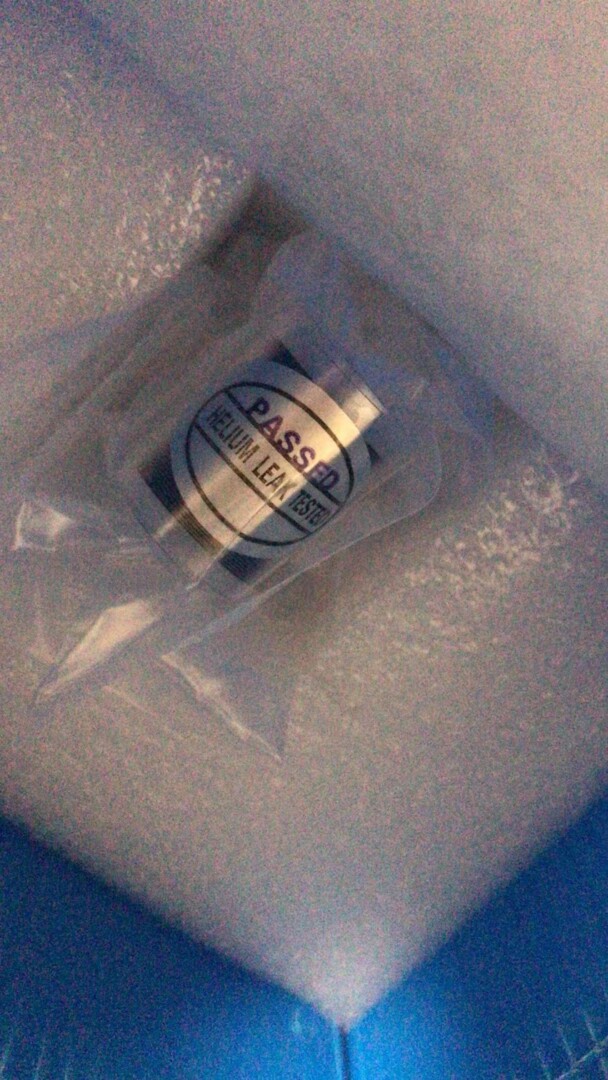
- Hermeticity — helium leak tested, typically to below 1×10⁻⁹ mbar·L/s, following the discipline in our helium leak testing guide.
- Cycle life at full stroke — documented fatigue data, not extrapolation.
- Stable spring rate and effective area — so contact force and kinematics stay within breaker design margins over life.
- Cleanliness and outgassing — interrupter envelopes are evacuated and sealed; bellows must not contaminate the internal vacuum.
- End-fitting design — weld-ready stems and flanges that survive brazing and welding into the ceramic envelope.
Alpha Technology manufactures custom edge welded bellows for vacuum interrupters, bellows-sealed actuators and high-cycle seal assemblies — helium-leak-tested, with fatigue data provided on request. Switchgear OEMs and interrupter manufacturers can contact our engineering team with stroke, pressure and life requirements.
FAQ
Why is SF6 being banned in switchgear?
SF6 is a potent greenhouse gas — about 25,200 times CO2 over 100 years — that persists for thousands of years. The EU plans to restrict its use in high-voltage switchgear above 145 kV from 2032, accelerating the shift to SF6-free vacuum technology.
What is inside an SF6-free circuit breaker?
Most SF6-free high-voltage breakers use vacuum interrupters — sealed vacuum envelopes whose moving contacts are operated through edge welded bellows — often with two interrupters in series to handle high voltage.
Why are bellows used in vacuum interrupters?
Bellows seal the moving contact stem where it passes through the vacuum envelope, allowing millions of mechanical operations without leaking atmospheric air into the interrupter vacuum.
How long does an interrupter bellows last?
Mechanical ratings of 10,000–30,000 operations are typical, with the bellows flexing on every operation. Fatigue life depends on stroke, wall thickness and alloy.
Building SF6-free switchgear? Contact Alpha Technology for leak-tested, cycle-rated bellows for vacuum interrupters.