
How Edge Welded Bellows Are Made: The Manufacturing Process Step by Step
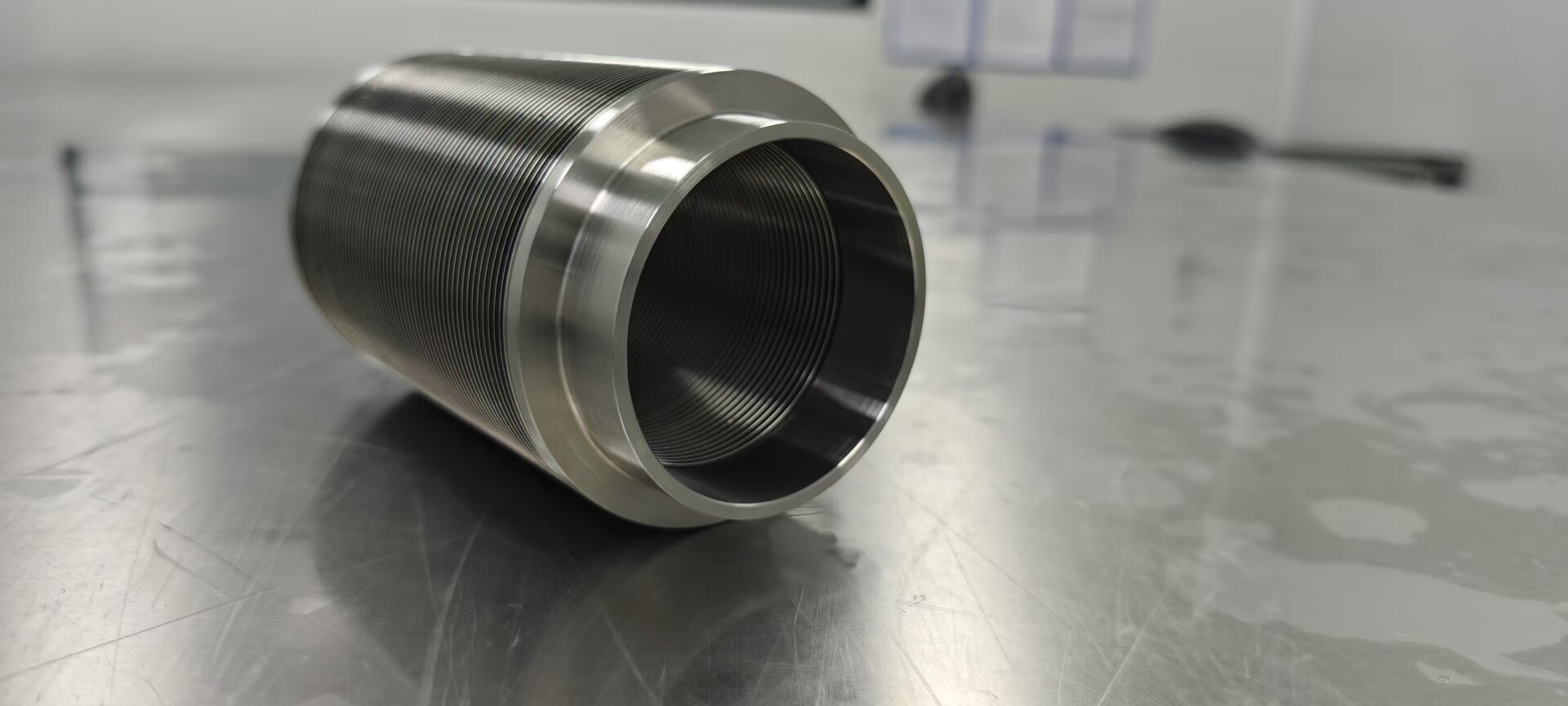
Edge welded bellows are among the most precise flexible metal components in industrial engineering. They are built from dozens of ultra-thin stamped diaphragms, each welded individually into a stack that can flex, extend, and compress millions of times without leaking. In this article we walk through every stage of the manufacturing process, from raw material to helium-tested finished product.
Step 1: Material Selection and Preparation
Everything starts with the right alloy. Common choices include 316L and 321 austenitic stainless steel for general vacuum service, precipitation-hardening AM350 for high-strength UHV applications, and Inconel 718 or Hastelloy for high-temperature or corrosive environments. Raw coil or strip stock is verified against material certificates (mill test reports) before production.
For a deeper comparison of alloys, see our bellows material selection guide.
Step 2: Diaphragm Stamping
Thin sheet metal is fed into a precision progressive die stamping press to produce annular diaphragms with extremely tight concentricity. Typical diaphragm thickness is 0.05–0.3 mm, and the stamping process must maintain consistent material thickness and a burr-free edge, because every surface will later become part of a weld seam.
Step 3: Cleaning
Any oil, dust, or oxide on the diaphragm surface will create weld defects. Parts go through multi-stage ultrasonic cleaning in solvents or aqueous alkaline baths, followed by drying in a clean environment. For UHV-grade bellows, cleaning standards follow vacuum-industry practice to keep outgassing rates minimal.
Step 4: Precision Welding (The Core Process)
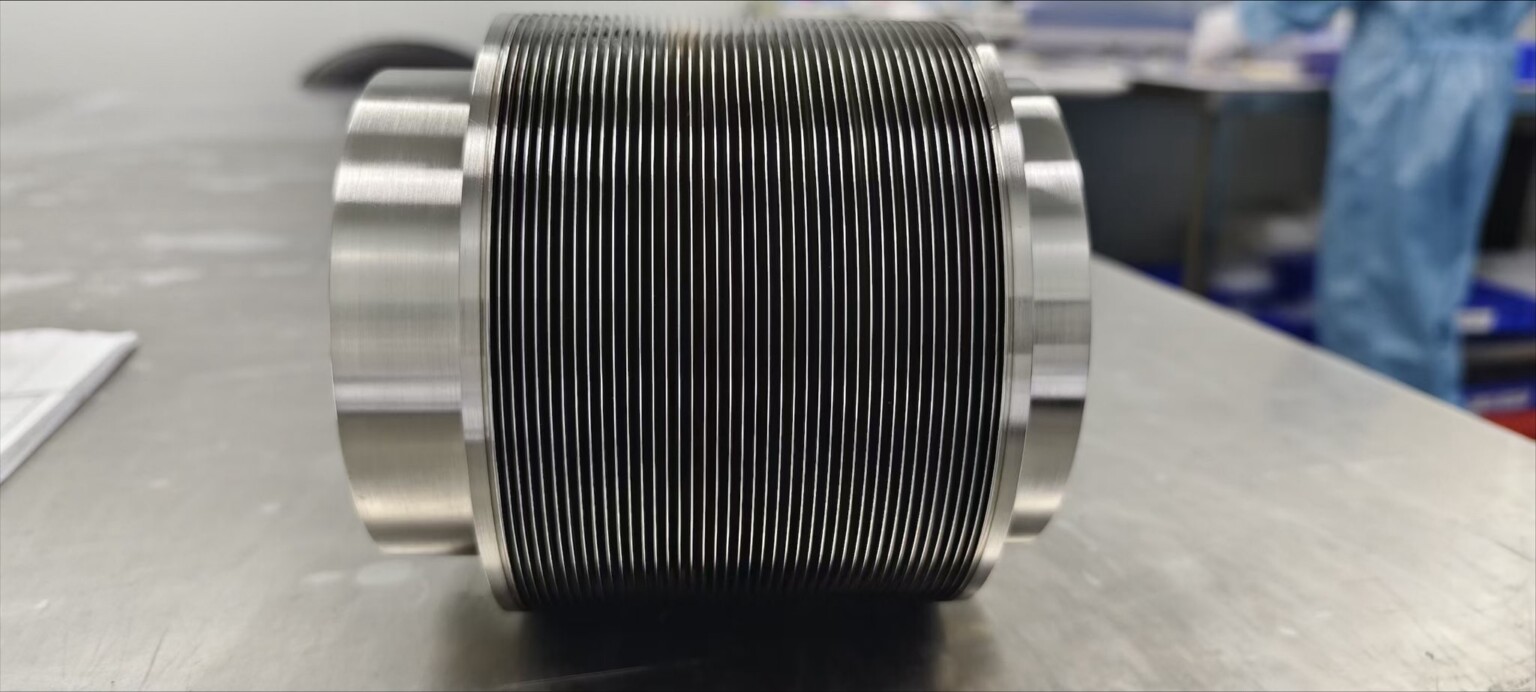
Diaphragms are alternately welded at the inner diameter and outer diameter. Each weld joins two adjacent diaphragms in a single continuous pass, typically with automated laser or TIG welding under shielding gas. Because wall thickness is so thin, the welding parameters (current, travel speed, shielding gas flow) must be tightly controlled. Poor parameter control causes burn-through, porosity, or distortion that can shorten cycle life dramatically.
The number of convolutions, diaphragm profile, and weld sequence are all engineered to the bellows’ required stroke, spring rate, and pressure rating. This is why the edge welded bellows technical guide is a useful starting point before you request a quote.
Step 5: End Fitting Attachment
Flanges, tube ends, or special connectors are welded or brazed onto the bellows ends. Options include KF (quick flange), CF (conflat), ISO, tube ends, and custom plates. Proper end-fitting design prevents weld distortion from pulling the bellows out of shape and keeps the assembly concentric.
Step 6: Heat Treatment (Optional)
Depending on material and required properties, bellows may receive a stress-relief or precipitation-hardening treatment. AM350, for example, is aged after welding to reach its high strength, while 316L assemblies are usually used in the as-welded condition.
Step 7: Helium Leak Testing
Every production bellows is leak-tested. The most common method is helium mass spectrometer leak detection: the bellows is pressurized with helium inside a vacuum chamber, and the mass spectrometer measures any helium escaping through the welds. Alpha Technology production bellows consistently achieve helium leak rates below 1×10⁻⁹ Pa·m³/s — suitable for ultra-high vacuum service.
Step 8: Cycle Life and Dimensional Testing
Fatigue life is validated on a cycling rig: the bellows is compressed and extended at its rated stroke for millions of cycles while monitored for leaks and spring-rate drift. Dimensional checks confirm free length, OD, ID, and flange parallelism against the drawing.
Why the Process Matters for Your Application
The manufacturing process determines everything you will experience in service: cycle life, leak tightness, spring rate, and consistency between units. When you order custom bellows, ask your supplier about:
- Diaphragm material and thickness
- Welding method and inspection records
- Helium leak test criteria and certificates
- Cycle life test data
Alpha Technology can supply test reports and material certificates with every order. If you need a custom design, see our design and selection guide, or contact our engineers with your drawing. You can also browse the full product range including short-stroke and long-travel edge welded bellows.
FAQ
How are edge welded bellows welded?
Edge welded bellows are made by alternately welding stamped metal diaphragms at their inner and outer diameters with automated laser or TIG welding, creating a leak-tight stack of convolutions.
What thickness are edge welded bellows diaphragms?
Typically 0.05 to 0.3 mm, depending on the bellows diameter, pressure rating, and required cycle life.
How are edge welded bellows leak-tested?
Helium mass spectrometer leak detection is the industry standard. Alpha Technology tests to better than 1×10⁻⁹ Pa·m³/s.
What is the difference between edge welded and welded edge bellows?
They are the same thing. “Edge welded” and “welded edge” both refer to bellows whose convolutions are formed by welding at the inner and outer edges of thin diaphragms.