
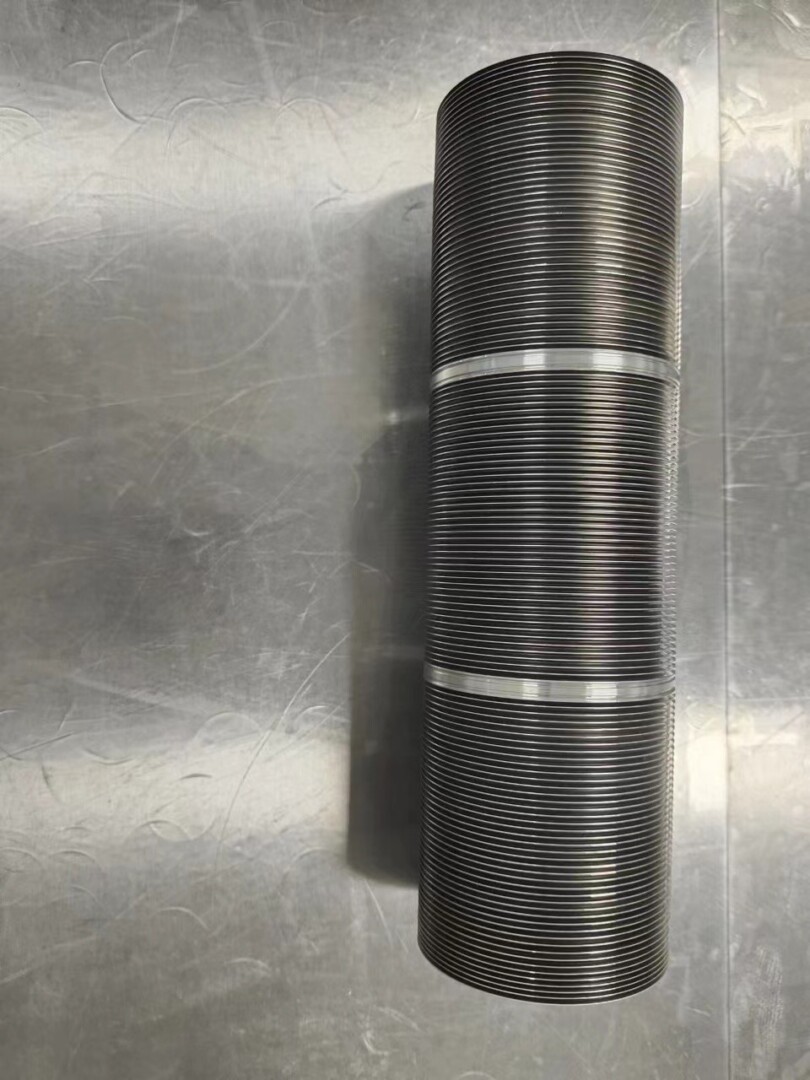
In July 2026, market analysts at Intel Market Research sized the global slit valves market for semiconductor use at $208 million in 2025, growing to $331 million by 2034 — a 7.1% CAGR that tracks the expansion of wafer fabs and advanced packaging lines worldwide. Around the same period, VAT Group, the world’s largest maker of vacuum valves, published its half-year 2026 results, highlighting sustained demand from semiconductor capital spending — and noting that its edge welded bellows production, the sealing heart of its valves, is manufactured in-house in Switzerland.
The economics are easy to read: every new fab adds thousands of slit valves and gate valves, and every one of those valves contains at least one edge welded bellows.
What a Slit Valve Actually Does
A slit valve isolates a process chamber from the transfer module in a cluster tool. The gate — a rectangular plate — moves vertically or horizontally through a narrow slot to open and close the passage. The motion is almost always powered through the chamber wall by a bellows-sealed actuator. When the valve closes, the gate compresses an O-ring or metal seal against the valve body, and the bellows provides the atmospheric-to-vacuum transition for the moving stem without ever letting the stem touch the chamber wall.
This is the defining engineering trade-off of vacuum valves: the actuator lives at atmosphere, the gate lives in vacuum, and the only link between them is a welded metal bellows that flexes billions of times in the life of the tool.
Why Edge Welded Bellows, Specifically
1. Stroke in a tight envelope
Slit valve strokes are short — typically 15–40 mm — but the valve body is thin. Edge welded bellows deliver 80–90% stroke-to-length ratios, letting designers fit the full stroke inside a compact actuator column. Formed bellows would need two to three times the installed length for the same travel.
2. High cycle life without particle generation
A slit valve in a high-throughput tool cycles millions of times per year. The bellows flexes as pure metal deformation — no sliding, no wear debris, no lubricant. OEMs accept nothing less for fab-clean environments, which is why the sealing stack (gate seal + bellows + stem) is designed as a single fatigue system. Our design guide documents how to size wall thickness and convolution count for cycle targets.
3. Materials that survive process chemistry
Etch and CVD chambers expose valve hardware to halogen gases, plasma and elevated temperature. AM350 and Inconel 718 bellows tolerate corrosive chemistries and thermal cycling that would destroy ordinary stainless. The material choice in the bellows often sets the corrosion lifetime of the whole valve.
The Valve Types That Depend on Bellows
- Slit valves — rectangular isolation between transfer and process chambers; the fastest-growing segment as fabs expand.
- Gate valves — larger rectangular/round isolation for load locks and service ports; bellows-sealed stems and side ports.
- Butterfly and pendulum valves — throttling and isolation where the shaft crosses vacuum; edge welded bellows seal the shaft journal.
- All-metal gate valves — bakeable to 300°C, using metal gate seals plus bellows; the standard for UHV processes like the ones in our UHV bellows guide.
Every category converges on the same component core: an edge welded bellows, a stem or shaft, and a sealing surface. When VAT describes bellows as “the heart” of its valves, it is not marketing — it is the bill of materials.
Bellows Failure Modes in Valves
Valve bellows fail in three ways: fatigue cracking after millions of cycles, corrosion pitting from process gases, and weld defects that become virtual leaks. The mitigation is systematic: weld inspection, helium leak testing of every unit, and cycle testing to a documented life. The methods are covered in our helium leak testing guide, and the material selection logic in the bellows material guide. For semiconductor service, Alpha Technology leak tests 100% of production and archives serialized reports per lot — the same discipline the valve OEMs require of their own in-house lines.
The 7.1% CAGR and Your Supply Chain
At $331 million by 2034, the slit valve market alone will consume hundreds of thousands of bellows assemblies per year, and gate/butterfly valves add on top. With vacuum equipment demand compounding and fab construction cycles running multi-year, valve OEMs and their bellows suppliers are capacity-constrained. Buyers who qualify a second or third bellows source now — with documented cleanliness and fatigue data — are de-risking their tool schedules.
Alpha Technology for Valve Bellows
Alpha Technology supplies custom edge welded bellows and short-stroke precision bellows for slit valves, gate valves and all-metal valves — AM350, 316L and Inconel 718, 100% helium leak tested with serialized reports. Contact our engineering team for cycle-life and envelope engineering support.
FAQ
What is a bellows sealed vacuum valve?
A valve in which the moving stem passes through the vacuum wall inside a welded metal bellows, keeping the actuator at atmosphere without sliding seals or particle generation.
Why use edge welded bellows in valves?
Edge welded bellows offer the highest stroke-to-length ratio (80–90%) and the best fatigue life per installed length, plus zero sliding contact for fab-clean service.
How big is the slit valve market?
Intel Market Research sized the semiconductor slit valve market at $208 million in 2025, reaching $331 million by 2034 at 7.1% CAGR.
What materials are used for valve bellows?
316L stainless for general service, AM350 for higher strength, and Inconel 718 for corrosive chemistries and elevated temperature.
Qualifying bellows for your valve program? Contact Alpha Technology for documented, high-cycle valve bellows.