
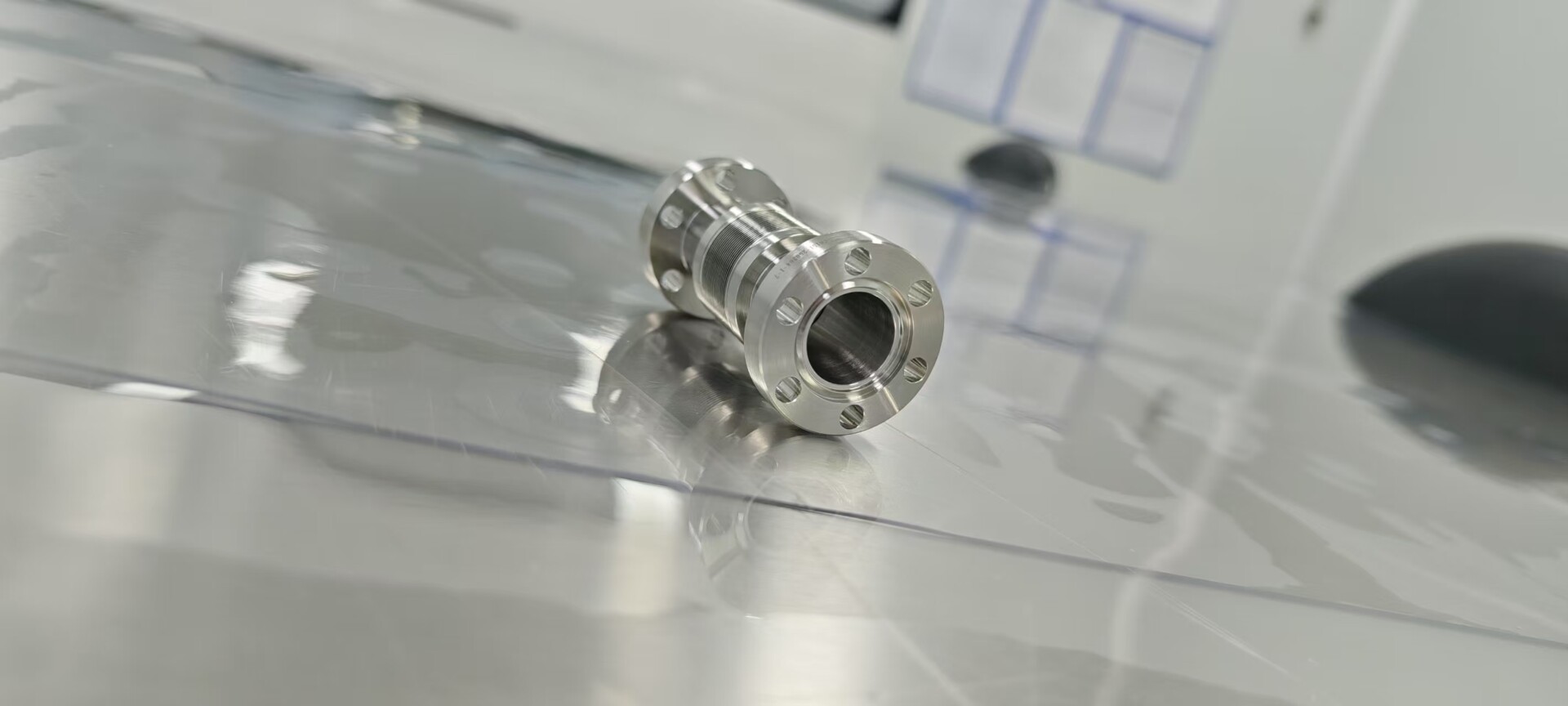
Edge Welded Bellows for UHV & Semiconductor Applications
Ultra-high vacuum (UHV) systems and semiconductor manufacturing equipment demand components that never outgas, never leak, and never fail mid-process. Edge welded bellows are the industry’s answer for motion, sealing, and isolation in these environments. This article explains why edge welded bellows dominate UHV and semiconductor designs, and where they are used.
Why UHV Systems Need Edge Welded Bellows
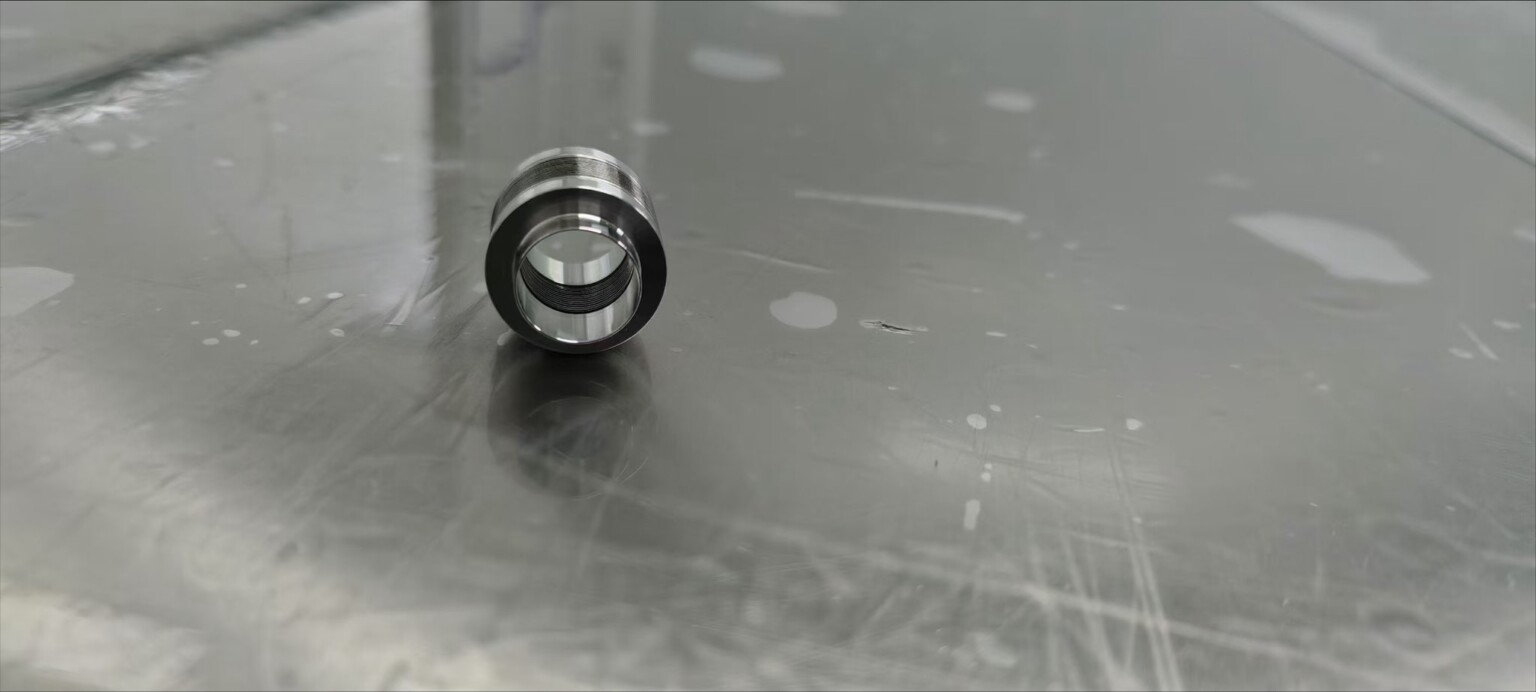
UHV systems operate at pressures below 1×10⁻⁷ Pa. At these pressures, even a microscopic leak or a small amount of outgassing ruins the vacuum. Edge welded bellows are preferred because:
- True leak tightness — helium leak rates below 1×10⁻⁹ Pa·m³/s are routinely achieved.
- Low outgassing — thin metal diaphragms with clean, fully fused welds have minimal surface area and virtual leaks.
- Bakeability — all-metal construction withstands the 150–400 °C bakeout cycles used to degas vacuum chambers.
- No elastomers — unlike O-ring seals, metal bellows survive temperature cycling and do not degrade over time.
- Precision motion — smooth, predictable spring characteristics suit actuators, manipulators, and valve stems.
Semiconductor Manufacturing Applications
In semiconductor fabs, edge welded bellows appear in nearly every piece of vacuum-based equipment:
- Gate valves and isolation valves — bellows isolate the moving valve stem from the vacuum, eliminating dynamic seals.
- Load lock chambers — bellows allow wafer-handling mechanisms to move in and out without breaking vacuum.
- PVD / CVD / etch tools — precision bellows in gas lines, slit valves, and pressure controllers.
- Stage and robot motions — bellows cover and seal linear and rotary motion feedthroughs.
- Inspection and metrology tools — vibration-free, clean motion for electron-beam and optical systems.
Alpha Technology supplies edge welded bellows to semiconductor equipment builders, and our semiconductor manufacturing page describes typical requirements such as clean-room compatibility and documented leak testing.
UHV Feedthroughs — Bellows and Power Combined
A vacuum feedthrough passes electrical power, signals, or motion through the vacuum boundary. Bellows-sealed feedthroughs use an edge welded bellows around a moving shaft, so the seal is dynamic without elastomers. This is critical for UHV actuators, sample manipulators, and RF-tuned systems.
Browse our vacuum feedthroughs, including UHV-rated coaxial and power feedthroughs, or combine a long-travel edge welded bellows with a flange of your choice.
Specifying Bellows for UHV / Semiconductor Service
- Leak rate — specify helium leak rate ≤ 1×10⁻⁹ Pa·m³/s and request leak test certificates.
- Cleanliness — require UHV cleaning and packaging (gloves, sealed bags, no hydrocarbon residue).
- Material — 316L for standard service; AM350 for higher strength and cycle life. See the material guide.
- Bakeout rating — confirm the bellows and end fittings can tolerate your bakeout temperature.
- Cycle life — define required cycles; we size diaphragm thickness and convolution count accordingly.
Quality Assurance at Alpha Technology
Every UHV-grade bellows we ship is helium leak tested and supplied with material certificates. Our process and design capabilities cover stamping, laser welding, cleaning, and assembly under controlled conditions. If you are building or maintaining vacuum equipment, contact our engineers with your drawing and we will confirm suitability within one business day.
FAQ
Are edge welded bellows suitable for ultra-high vacuum?
Yes. With helium leak rates below 1×10⁻⁹ Pa·m³/s and bakeable all-metal construction, edge welded bellows are the standard choice for UHV systems.
What is the difference between UHV and HV bellows?
UHV bellows are cleaned, tested, and packaged to stricter standards (lower leak rates, bakeable, low outgassing). The mechanical design may be identical; the difference is in processing and certification.
Do edge welded bellows need lubrication?
No. Metal bellows are dry-lubricated by nature and require no grease or oil, which is why they are ideal for clean and UHV environments.