
In August 2026, Fortune Business Insights projected the global freeze drying equipment market from $2.53 billion in 2026 to $4.43 billion by 2034, while Grand View Research independently pegged the same market at $2.3 billion in 2026, growing at 9.1% CAGR toward $4.3 billion by 2033. The driver list reads like a who’s who of modern pharma: GLP-1 weight-management drugs, antibody-drug conjugates (ADCs), mRNA therapeutics and biologics biosimilars — all of which are formulated as sterile lyophilized powders that must be dried under vacuum without ever touching atmosphere.
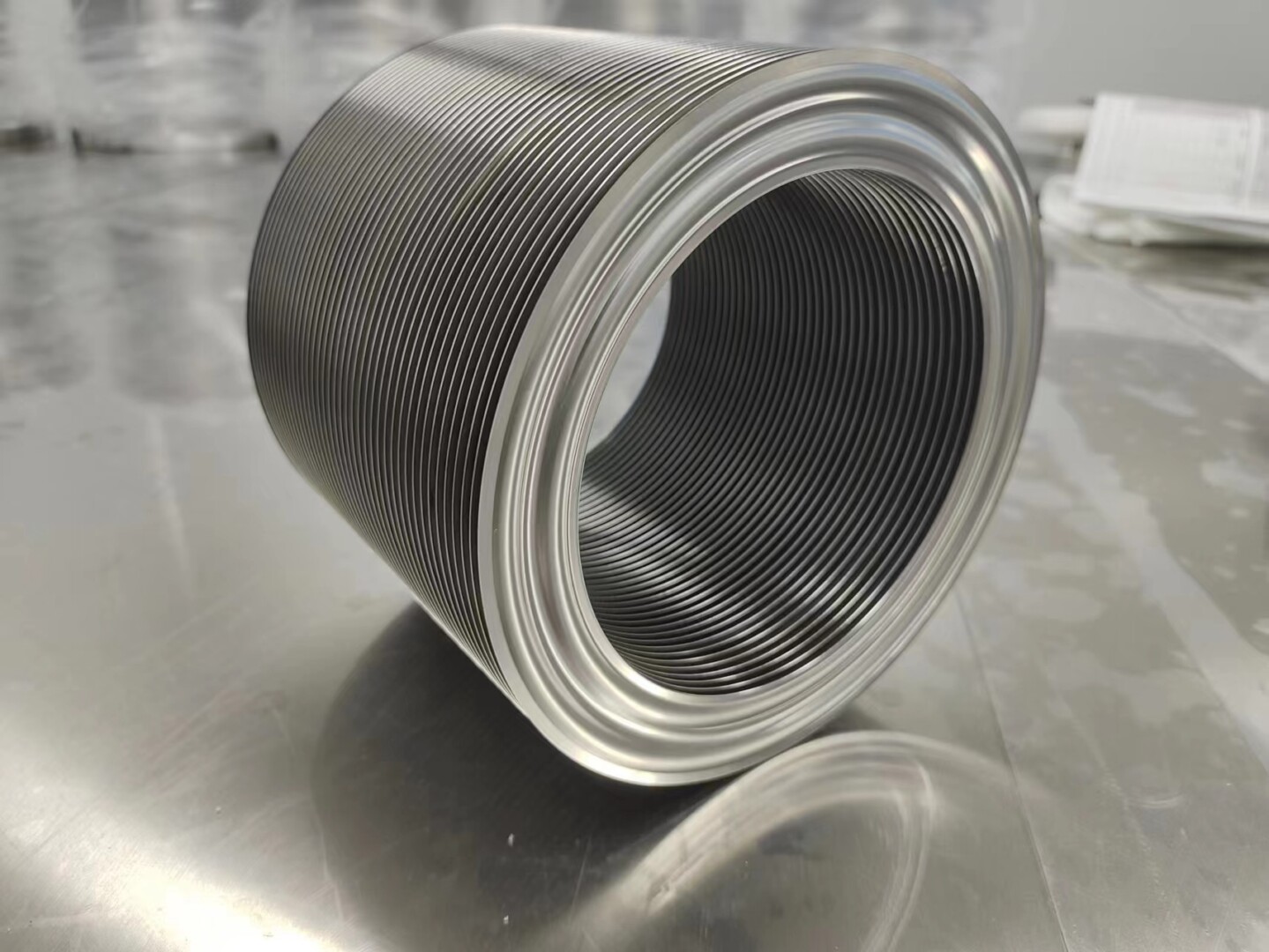
Behind every vial of lyophilized drug is a machine the size of a room, running a vacuum process for days at a time, sealed by components that most people have never heard of: edge welded bellows in the valves, stoppering mechanisms and loading systems of the freeze dryer.
Lyophilization Is a Vacuum Process
Freeze drying removes water by sublimation: the drug product is frozen, then held at low temperature while the chamber pressure drops to 0.1–1.0 mbar, so ice turns directly to vapor. The vapor is captured on a refrigerated condenser at -50°C to -80°C, and the pressure difference between chamber and condenser drives the entire process. It is, in other words, a controlled vacuum operation running for 24–72 hours per batch — and any leak or pressure instability during those hours can ruin an entire batch of drug worth millions of dollars. Sterility, moisture and pressure control are the three non-negotiable parameters, and all three depend on the vacuum envelope.
That envelope is built from welded stainless chambers, edge welded bellows-sealed valves and metal or elastomer seals engineered for CIP (clean-in-place) and SIP (steam-in-place) cycles that see 121–135°C saturated steam and caustic detergents. Very few sealing technologies survive that regime for thousands of cycles; welded metal bellows are among them.
Where Bellows Do the Work in a Freeze Dryer
1. Main-chamber and condenser isolation valves
The largest valves in a freeze dryer sit between the product chamber and the ice condenser, opening only when sublimation begins. These are typically butterfly or gate valves whose shaft and actuation cross the vacuum wall through edge welded bellows. Because the valve sees steam sterilization and moisture-laden vapor, elastomer shaft seals are the first thing to fail — bellows seals remove the sliding interface entirely.
2. Stoppering and loading mechanisms
At the end of the cycle, the freeze dryer presses stoppers into every vial while still under vacuum or inert gas — a mechanism called stoppering. The pressurizing plate is driven by rods that pass through the chamber wall, and each rod is sealed by a bellows that flexes the full stoppering stroke. Loading systems that transfer trays and vials in and out also use bellows-sealed motion. These are exactly the short-stroke precision bellows duty class Alpha Technology builds for high-cycle service.
3. Chamber doors and shelf motion
Freeze dryer doors are large and must seal cold, vacuum, steam and caustic washdown conditions. Door actuation and the shelf-lift mechanism inside the chamber both use bellows-sealed feedthroughs; the shelf-lift alone cycles thousands of times per year at full stroke. The spring-rate and fatigue engineering for these assemblies is documented in our bellows design guide.
Why Metal Bellows Beat Elastomers in Sterile Vacuum
In a pharmaceutical environment, outgassing and particle shedding are measured in parts per billion — a single particle can fail a sterility test. Elastomer dynamic seals shed wear particles, outgas volatiles, and degrade under steam. Edge welded bellows, made from 316L stainless, are inert, particle-free and fully steam-tolerant. They also survive the extreme temperature swings of SIP — from room temperature to 135°C and back, hundreds of times — because welded metal flexes elastically while elastomers age and crack. This is why freeze dryer OEMs increasingly specify all-metal bellows valves and bellows-sealed feedthroughs for every moving penetration of the sterile boundary.
Qualification and Leak Integrity for cGMP
Pharmaceutical vacuum systems are qualified, not just tested. The acceptance sequence typically includes helium leak testing to below 1×10⁻⁹ mbar·L/s, pressure-hold tests, and cycle testing before and after steam exposure — the full protocol in our helium leak testing guide. Vendors must provide material certifications, weld records and serialized leak reports, because the batch record for a lyophilized drug traces back to the equipment. Alpha Technology ships freeze-dryer components with exactly that documentation, matching the discipline the industry applies to vacuum feedthroughs in semiconductor and biopharma service alike.
Alpha Technology for Freeze Dryer OEMs
Alpha Technology supplies custom edge welded bellows, vacuum feedthroughs and short-stroke precision bellows for freeze dryer isolation valves, stoppering rods, doors and shelf-lift mechanisms — pharmaceutical-grade 316L, steam-cycling qualified and 100% helium leak tested with serialized documentation. Contact our engineering team with your chamber, stroke and sterilization requirements.
FAQ
Why are freeze dryers vacuum systems?
Lyophilization removes water by sublimation: frozen product is held at low pressure (0.1–1.0 mbar) so ice turns directly to vapor, which is captured on a cold condenser.
Where are bellows used in freeze dryers?
In main-chamber and condenser isolation valves, stoppering-rod seals, chamber-door actuation, shelf-lift feedthroughs and vial loading systems.
How big is the freeze drying equipment market?
Fortune Business Insights projects $2.53 billion in 2026 growing to $4.43 billion by 2034; Grand View Research forecasts 9.1% CAGR to $4.3 billion by 2033.
Why metal bellows instead of elastomer seals?
Elastomers shed particles, outgas and degrade under steam; welded metal bellows are inert, particle-free, and survive hundreds of 135°C SIP cycles.
Qualifying bellows for a freeze dryer or sterile vacuum line? Contact Alpha Technology for cGMP-ready, steam-qualified components.