
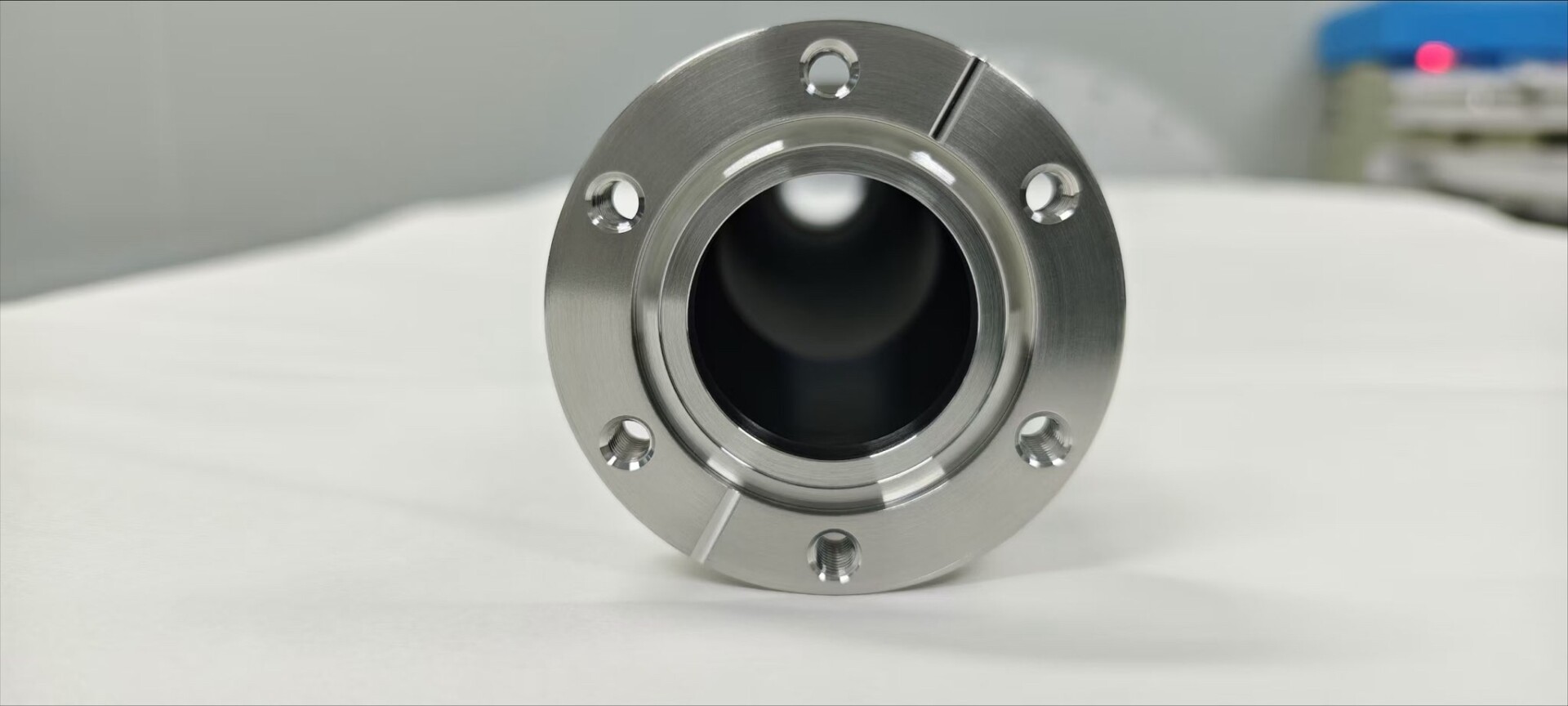
On June 9, 2026, NASA named the four astronauts of the Artemis III mission — the crew that will fly the first crewed demonstration of the Artemis lunar architecture, with a crewed lunar landing now targeted for 2028 on Artemis IV. The agency simultaneously announced four new commercial lunar lander missions, stepping up the cadence of robotic lunar deliveries. Between Earth and the lunar surface lies an engineering chain that most people never see: propulsion, docking, life support and landing hardware — much of it sealed, actuated and tested in vacuum.
Lunar hardware is space hardware at its most demanding: cryogenic propellants, hard vacuum, extreme thermal cycling, and the requirement that every seal work on the first attempt, months after launch.
Where Vacuum Hardware Appears in a Lunar Mission
1. Propulsion: cryogenic and hypergolic systems
Lunar landers burn cryogenic hydrogen-oxygen or methane-oxygen, and transfer vehicles handle propellant in orbit. Propellant tanks, feed lines, valves and disconnects are vacuum-jacketed for thermal control — the same hardware family as NASA’s cryogenic fuel depot demonstrations and orbital refueling systems. Edge welded bellows absorb the differential contraction of lines that cool hundreds of degrees between fill and burn, while cryogenic feedthroughs carry instrumentation across the tank wall.
2. Docking and transfer interfaces
Artemis missions depend on docking between Orion, the lander and transfer stages. Docking mechanisms are sealed, actuated interfaces: capture latches, seals and load paths that must align, engage and seal in hard vacuum. Bellows in the docking tunnel absorb alignment tolerances while maintaining a crew-tight seal — a use case where bellows design engineering literally separates mission success from failure.
3. Life support
On the way to the Moon and on the surface, crews depend on environmental control and life support systems: pressure control, CO2 scrubbing, water recovery and thermal control. These systems are full of pumps, valves, sensors and seals — including feedthroughs that carry power and signals into pressure vessels, and bellows that handle flexure in ducts and actuators. Reliability expectations are extreme: components qualified to fail only after millions of cycles, with full traceability.
4. Landing and ascent propulsion
The lander’s descent and ascent engines throttle in hard vacuum, with valves, gimbals and propellant lines all sealed against vacuum. Engine valves, in particular, use metal bellows where elastomer seals would fail under cryogenic temperature or long-term vacuum exposure.
Testing Lunar Hardware on Earth
Before any of this flies, it is tested in facilities that simulate the Moon: thermal-vacuum chambers that pull 10-5 mbar while cycling components from -180 °C to +150 °C, vibration rigs, and leak-test stations. The acceptance standard is uncompromising — helium leak rates of 10-9 mbar·L/s, serialized reports, and materials traceable to the heat number, exactly the framework in our helium leak testing guide. For component suppliers, passing these tests is the price of admission to the Artemis supply chain.
The Industrial Opportunity
The commercial lunar economy adds its own vacuum demand: four new NASA commercial lander missions were announced alongside Artemis III, and private lunar payload programs continue to grow. Each lander contract converts directly into vacuum component orders — propulsion feed systems, cryogenic disconnects, docking seals and test infrastructure. The same holds on the ground: thermal-vacuum test chambers, propellant load facilities and cleanrooms are themselves vacuum projects, as we described for orbital refueling ground systems. For component suppliers, every mission means both flight hardware and the test infrastructure that qualifies it.
Testing Lunar Hardware on Earth
Artemis is not one mission but a cadence: NASA’s plan calls for a series of crewed landings, a lunar surface station, and sustained commercial lunar deliveries, and both SpaceX and Blue Origin landers are in development. Every lander, transfer vehicle and surface asset repeats the same bill of materials — bellows, feedthroughs, valves, gaskets — in production quantities. This is the same supply-chain dynamic we described for national infrastructure buildouts: early qualifiers win the recurring volume.
Alpha Technology for Lunar and Space Hardware
Alpha Technology manufactures custom edge welded bellows, vacuum feedthroughs and formed bellows for propulsion, cryogenic and life-support systems — aerospace-grade alloys, vacuum-fired, 100% helium leak tested with serialized reports, with thermal-vacuum testing support. The material guide supports alloy selection for cryogenic and high-temperature service. Contact our engineering team with your envelope and test requirements.
FAQ
When will astronauts land on the Moon?
NASA targets the first crewed Artemis lunar landing in 2028 (Artemis IV); the Artemis III crew, named in June 2026, will fly a demonstration mission in 2027.
Why does lunar hardware need vacuum engineering?
Propulsion, docking and life support systems operate in hard vacuum with cryogenic fluids; seals, bellows and feedthroughs must be leak-tight and thermally cycled.
What is thermal-vacuum testing?
Testing components in a vacuum chamber while cycling temperature from about -180 °C to +150 °C, simulating the space and lunar thermal environment.
What leak rate is required for crewed spacecraft hardware?
Critical hardware is typically accepted at helium leak rates of 10-9 mbar·L/s or better, with full material and test documentation.
Qualifying vacuum hardware for space programs? Contact Alpha Technology with your temperature range, envelope and documentation requirements.