
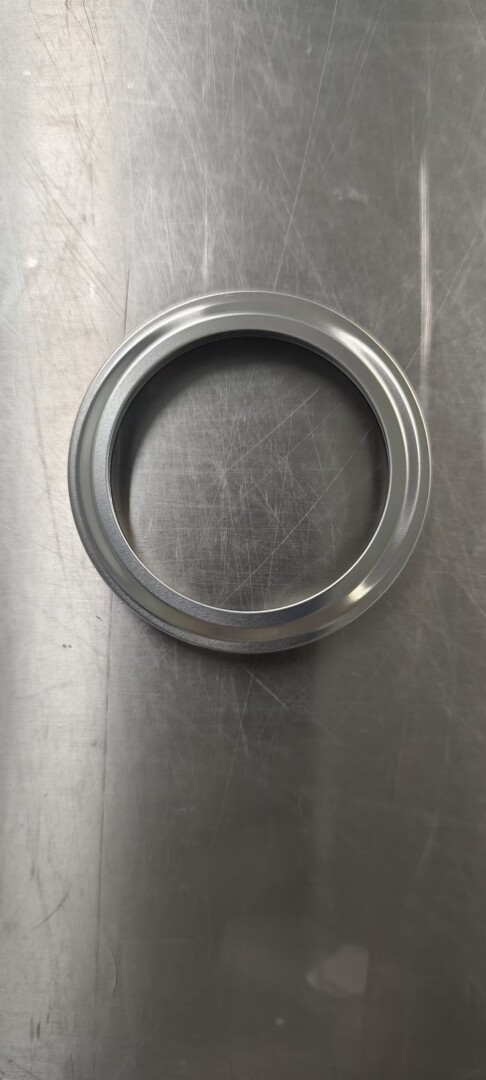
In early 2026, Argonne National Laboratory’s Advanced Photon Source (APS) officially completed its decade-long upgrade, with the US Department of Energy granting final approval to the project. The APS Upgrade replaced the storage ring with a fourth-generation lattice, delivering beams hundreds of times brighter than before. Across the world, the same transformation is underway: ALS-U at Berkeley, Diamond’s upgrade in the UK, ALBA II in Spain, and a wave of new sources in Asia are all rebuilding storage rings as fourth-generation machines.
A synchrotron upgrade is many things — magnet physics, accelerator science, beamline engineering. But the machine that stores the beam is a vacuum system: an ultra-high-vacuum ring, kilometers long, that must hold 10-9 to 10-11 mbar while electron beams circulate near the speed of light for billions of turns.
A Global Wave of Upgrades
The APS completion is one node in a worldwide program: ALS-U at Berkeley, Diamond’s booster-and-ring replacement in the UK, ALBA II in Spain, Sirius in Brazil, HEPS in China, and Japan’s SPring-8-II are all fourth-generation rebuilds or new sources, with several more announced in India, Korea and the Middle East. Each project is a multi-year, billion-dollar engineering effort — and each one specifies thousands of UHV components: feedthroughs, gate valves, bellows, beamline front-ends and diagnostic hardware. For vacuum component suppliers, the accelerator and light-source sector is a stable, multi-year demand pool that is far less cyclical than semiconductor tooling.
Why Fourth-Generation Rings Are UHV Challenges
1. Smaller apertures, same vacuum
Fourth-generation lattices use much smaller magnet apertures to reach higher brightness. The beam pipe shrinks — in some places to tens of millimeters — but the vacuum requirement gets tighter. Smaller pipes mean higher conductance losses for pumps, so vacuum hardware must be placed with surgical precision.
2. Lower impedance, cleaner surfaces
Beam-induced heating and electron-cloud effects are worse in small pipes. Components must have minimal geometric impedance and surfaces treated to suppress electron emission — copper-coated or NEG-coated chambers are standard, and every feedthrough and bellows must match the impedance discipline.
3. Insertion devices and photon beamlines
Undulators and wigglers — the devices that generate the brilliant X-rays — sit inside vacuum chambers with complex motion requirements. Gap-tuning mechanisms and photon shutters use edge welded bellows to seal motion at UHV; our design guide covers the envelope and cycle-life engineering.
4. Reliability in a user facility
A synchrotron serves thousands of external scientists a year; uptime is measured in fractions of a percent. Every bellows, valve and feedthrough in the ring must be qualified to the same standard as semiconductor fab hardware — 100% helium leak tested, baked and documented. The qualification approach mirrors what we describe for fab tools in edge welded bellows for UHV applications.
The Vacuum Component Inventory of a Modern Ring
- Storage ring bellows: thin-wall edge welded bellows between chambers, absorbing thermal expansion, alignment offsets and vibration — often the most cycle-stressed components in the ring.
- RF and power feedthroughs: high-power RF cavities and diagnostics cross the vacuum boundary with water-cooled feedthroughs.
- Gate valves and vacuum isolation: sector isolation valves let teams work on one section while the rest of the ring stays under vacuum.
- Beamline front-ends: photon shutters, filters and slits all operate in vacuum with bellows-sealed mechanisms.
Materials and Testing at UHV Scale
Synchrotron components demand materials with low outgassing and low magnetic permeability: 316L stainless, aluminum alloys, and copper or NEG coatings for the beam chamber. Every part is vacuum-fired, baked, and helium leak tested to 10-10 mbar·L/s or better. The material guide and our leak testing guide are the two documents your auditor will ask about first.
Alpha Technology for Accelerator and Synchrotron Programs
Alpha Technology supplies custom edge welded bellows, vacuum feedthroughs and welded assemblies for storage rings, beamlines and accelerator systems — UHV-tested, vacuum-fired, 100% leak tested with serialized reports. We work with research institutions and their suppliers on both upgrade projects and new sources. Contact our engineering team with your aperture, impedance and pressure requirements.
FAQ
What is a fourth-generation synchrotron?
A storage ring rebuilt with a multi-bend achromat lattice that reduces electron beam emittance, producing X-ray beams hundreds of times brighter than third-generation sources.
What vacuum level does a storage ring need?
Modern rings run at 10-9 to 10-11 mbar; the photon beamlines and insertion devices hold UHV or XHV depending on the beamline.
Why are bellows critical in a synchrotron ring?
Bellows connect chamber sections while absorbing thermal expansion, vibration and alignment offsets — providing motion and flexibility without breaking the UHV boundary.
How is synchrotron vacuum hardware qualified?
With vacuum firing, bakeout, 100% helium leak testing to 10-10 mbar·L/s, and full material and test documentation — exactly what Alpha Technology ships.
Working on a ring upgrade or new light source? Contact Alpha Technology with your vacuum specification for qualified component supply.