
India’s semiconductor build-out is shifting from announcements to construction. According to the government’s targets cited by IMARC Engineering in May 2026, four semiconductor plants should be operational by the end of 2026, two more in 2027, with the first silicon expected from the Dholera fab. The national Semiconductor Mission — now in its 2.0 phase — sits under a 10-year roadmap targeting a $120–150 billion semiconductor value chain by 2035, reported by CRN Asia in June 2026. And in September 2026, SEMICON India opens in New Delhi’s Yashobhoomi convention center, with vacuum technology leaders including Pfeiffer Vacuum+Fab Solutions and VAT Group exhibiting.
For the vacuum industry, this is a familiar pattern — we documented the same supply-chain story for Europe’s fab boom and the $820B US investment wave. Every new fab geography creates two waves of vacuum demand: construction-phase equipment (pumps, valves, chambers), then a decades-long aftermarket of replacement bellows, seals and feedthroughs.
What India Is Actually Building
India’s fab program spans multiple nodes and owners. Dholera (Gujarat) hosts the flagship silicon fab project expected to deliver first silicon; other sites include Sanand (Gujarat) with a specialty semiconductor fab, a memory/ATMP complex, and OSAT packaging facilities. Micron’s assembly and test plant in Sanand already began production in 2025. The government’s Phase 2 approvals in 2025–2026 added more proposals, and the Semiconductor Mission’s incentive program — up to 50% capex support — is pulling global equipment and materials suppliers into the country.
The scale matters for vacuum component suppliers because each fab is a vacuum system: thousands of process chambers, tens of thousands of gate and slit valves, hundreds of miles of vacuum line, and a permanent stream of bellows and seal replacements.
Why New Fab Geographies Need New Vacuum Supply Chains
Local support is a qualification requirement
Fabs cannot wait six weeks for a bellows shipped across the world when a tool is down. Tool OEMs and fabs are pushing vacuum component suppliers to establish local inventory, local leak-test and repair capability, and local engineering support. India is now going through what the US and Europe went through: every major vacuum component vendor is opening or expanding an India presence — the SEMICON India 2026 exhibitor list confirms it.
The spares multiplier
One fab can consume thousands of bellows assemblies per year across pump isolators, load locks, slit valves and motion feedthroughs. The edge welded bellows that seal these components are consumables with defined cycle lives — and every new fab is a new, long-term demand center.
Packaging and OSATs are vacuum-heavy too
India’s strategy includes heavy OSAT and advanced packaging capacity. Packaging tools — hybrid bonding, plasma dicing, PVD barrier layers, solder reflow under vacuum — are as vacuum-dependent as front-end tools, as we examined in TSMC’s Arizona packaging plant and HBM4 hybrid bonding. Every bonding tool, every plating line’s vacuum sputter, every die-attach chamber adds to the hardware ledger.
The Component Mix Every Indian Fab Will Buy
- Bellows-sealed gate and slit valves — the workhorses of wafer transfer; bellows are the replaceable heart, as detailed in our slit valve hardware analysis.
- Pump connection bellows — vibration isolation between pumps and chambers.
- Vacuum feedthroughs — power, RF, thermocouple and motion crossings; see our KF, CF and ISO feedthrough guide.
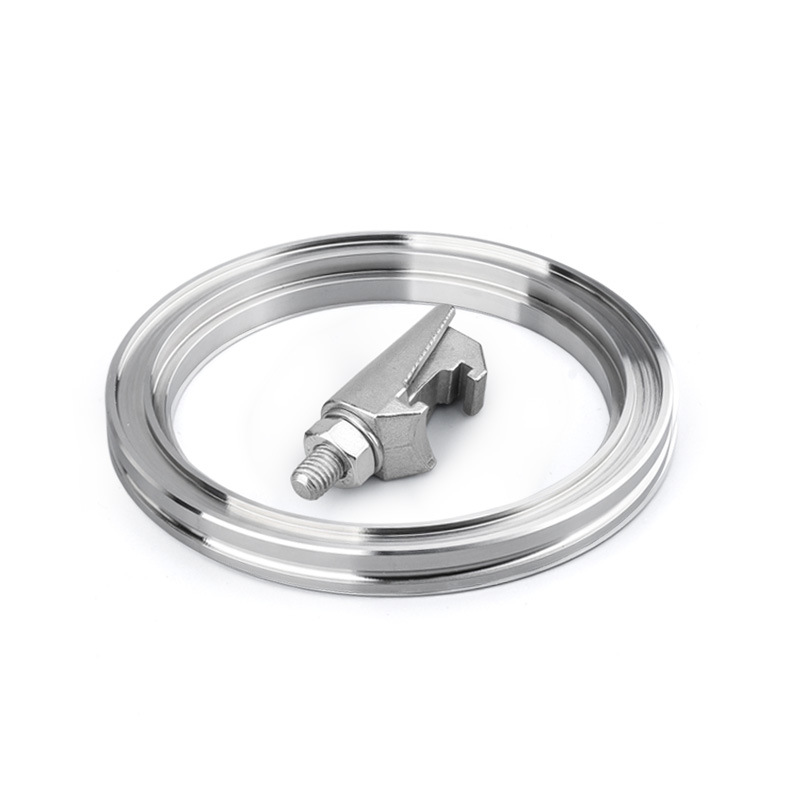
- Gaskets and seals — CF copper, KF/ISO elastomer and all-metal seals for every flange in the tool.
- Custom weld assemblies — leak-tested manifolds and lines, built to the standards in our helium leak testing guide.
Timing: The Window Is Now
The vacuum component aftermarket in a region follows tool installs by 6–18 months — first spares orders arrive as tools qualify. With first silicon targeted by end-2026 and more fabs in 2027, the qualification window for component suppliers in India is essentially now. Suppliers who qualify components during tool bring-up will hold that socket for the fab’s life; the follow-on market for bellows, seals and feedthroughs is effectively annuity revenue.
The Alpha Technology Angle
Alpha Technology ships custom edge welded bellows, vacuum feedthroughs and bellows-sealed assemblies worldwide for semiconductor fabs, packaging lines and test facilities — helium-leak-tested, serialized and documented to fab standards. Equipment OEMs and system integrators serving India’s fab build-out can contact our engineering team for qualified, volume-ready components.
FAQ
How many fabs is India building?
Under India Semiconductor Mission targets, four plants should be operational by end-2026 and two more in 2027, with first silicon expected from the Dholera fab in Gujarat.
What is India’s semiconductor market target?
A 10-year roadmap targets a $120–150 billion semiconductor value chain by 2035, including fabs, packaging, materials and design.
Why do fabs need vacuum components?
Process chambers operate under vacuum for deposition, etch, implant and metrology. Every chamber needs pumps, valves, feedthroughs and sealed bellows — all of which must be leak-tested and cycle-rated.
When does vacuum aftermarket demand start?
Spares orders typically begin 6–18 months after tool installs, as tools qualify and bellows, seals and valves enter their replacement cycles.
Serving the India fab build-out? Contact Alpha Technology for qualified vacuum components delivered globally.