
In late August 2026, NASA began a campaign of plume-surface interaction (PSI) tests at Langley Research Center, firing scaled rocket engines into a bin of simulated lunar regolith inside a massive vacuum chamber — work the agency calls “the most complex test of its kind to be undertaken in a vacuum chamber.” Ashley Korzun, the test campaign’s principal investigator, is blunt about why it matters: when a lander’s engine fires near the lunar surface, the exhaust digs craters, blasts dust at high velocity and generates forces that can tip a spacecraft over.
Each run lasts about six seconds: a scaled rocket nozzle fires downward into a shallow bin — roughly six and a half feet across and a foot deep — filled with jagged gray powder standing in for lunar soil. Tests run at various heights above the surface, mapping how ejecta, cratering and aerodynamic forces change as a lander descends. The data feeds directly into the design of Artemis-era landers and future commercial lunar spacecraft, complementing the flight hardware story we covered in Artemis III vacuum hardware.
Why the Test Needs a Vacuum Chamber
On Earth, rocket exhaust in open air forms a narrow, well-behaved plume. On the Moon — with essentially no atmosphere — the exhaust expands dramatically, interacts with the soil differently, and throws dust along trajectories that cannot be reproduced at ambient pressure. To trust the data, NASA must remove the atmosphere: the test campaigns run inside Langley’s 60-foot spherical vacuum chamber, pumped down to pressures low enough that the plume behaves the way it will a quarter-million miles away.
That fidelity requirement is why the test is so complex. It is one thing to hold vacuum in a static chamber; it is another to feed propellant, ignition systems, instrumentation and motion systems through the chamber wall while a hot engine is running inside.
The Vacuum Hardware Behind a Ground Test Like This
A plume-surface interaction facility is, functionally, a medium-sized vacuum process plant. The hardware vocabulary will be familiar to anyone who builds vacuum systems:
- Propellant and gas lines cross the chamber wall through vacuum feedthroughs rated for pressure, flow and in some cases cryogenic temperatures.
- Thrust stands and positioning rigs need motion across the boundary — linear and rotary motion feedthroughs, bellows-sealed actuators, and flexible connections that tolerate misalignment without leaks.
- Bellows assemblies absorb the vibration and thermal growth of feed lines and support structures, isolate pump vibration from force-measuring instrumentation, and allow the test rig to be reconfigured between runs. This is standard practice for edge welded bellows in test facilities.
- Gate and isolation valves let crews service the nozzle and regolith bin without a full chamber vent — the same role slit and gate valves play in semiconductor tools, as we described in bellows-sealed valve hardware.
- Instrumentation feedthroughs — thermocouples, strain gauges, high-speed camera and data lines — number in the dozens on a rig of this class.
From Test Cell to Flight Hardware
The connection between ground test and flight is not metaphorical. Lunar landers themselves depend on the same component families: bellows provide flexibility in propellant feed lines that must tolerate landing loads and thermal cycling; sealed actuator assemblies protect mechanisms from regolith; and every fluid or electrical crossing of a pressurized-to-vacuum boundary is a feedthrough problem. The disciplines proven in thermal-vacuum testing of spacecraft and in electric propulsion test facilities carry over directly.
As lunar activity intensifies — Artemis landings, CLPS commercial deliveries, and proposed lunar infrastructure — the demand for both test capacity and flight-qualified vacuum hardware grows with it. Vacuum chamber time is already a scheduling bottleneck for the industry, and every new facility is itself a customer for chambers, valves, feedthroughs and bellows.
The Alpha Technology Angle
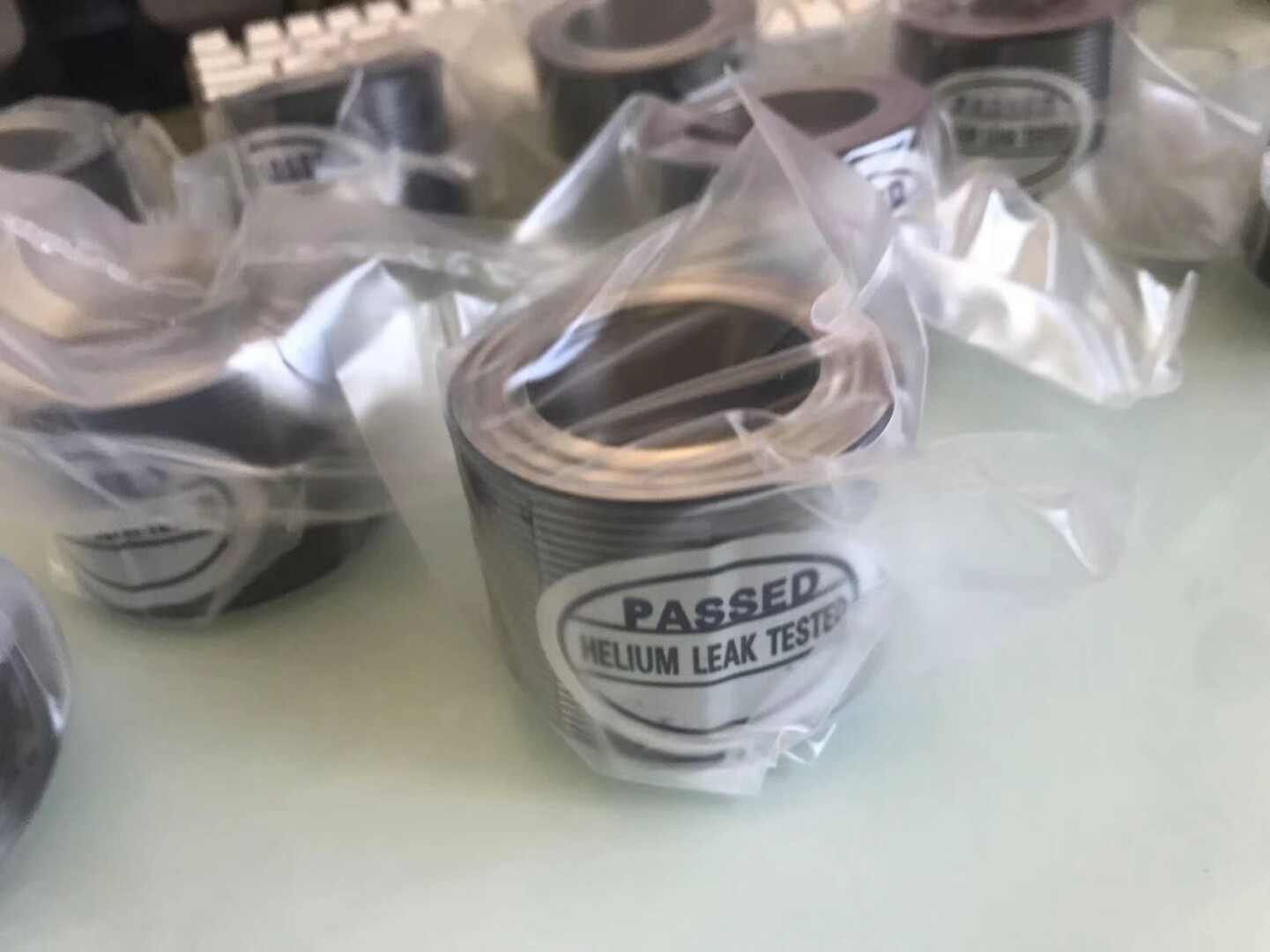
Alpha Technology builds custom edge welded bellows, vacuum feedthroughs and sealed assemblies for aerospace test facilities and space hardware — helium-leak-tested, with documented cycle life and material traceability. If your ground test or flight program needs sealed components that survive vibration, thermal cycling and regolith-adjacent service, contact our engineering team.
FAQ
What is plume-surface interaction?
PSI is the interaction between a rocket engine’s exhaust plume and the surface beneath it. On airless bodies like the Moon, exhaust digs craters and accelerates dust and gravel to high speeds, creating hazards and forces that landers must be designed against.
Why does NASA test plume-surface interaction in a vacuum?
Without an atmosphere, exhaust expands and interacts with soil very differently than on Earth. Vacuum chamber testing reproduces lunar conditions so cratering, ejecta and forces match what a lander will actually experience.
What vacuum hardware does a plume test facility use?
Propellant line feedthroughs, bellows-sealed motion feedthroughs and actuators, gate valves for servicing, and dozens of instrumentation feedthroughs — all leak-tested and cycled between test runs.
How long does each NASA PSI test run?
Each firing lasts about six seconds, with the nozzle at various heights above a bin of simulated lunar regolith roughly 6.5 feet in diameter.
Building or upgrading a vacuum test facility? Contact Alpha Technology for leak-tested bellows, feedthroughs and sealed assemblies.