
On August 3, 2026, Commonwealth Fusion Systems (CFS) announced it had raised an additional $1 billion in equity financing — the single largest funding round ever recorded for a private fusion company, according to World Nuclear News. The money funds SPARC, the compact tokamak under construction in Devens, Massachusetts, that the company expects to become the world’s first commercially relevant fusion machine, reaching scientific breakeven in 2027.
SPARC is deliberately compact: roughly one-65th the volume of ITER, yet designed to produce about the same fusion power — by running much higher magnetic fields from new high-temperature superconducting (HTS) magnets. Small size means the whole machine — vacuum vessel, magnets, cryostat, fueling and exhaust systems — must be engineered with densities no tokamak has attempted. For the vacuum industry, SPARC is a masterclass in what compact high-field fusion demands.
Why a Compact Tokamak Is a Vacuum Machine
1. The plasma chamber is a UHV vessel under stress
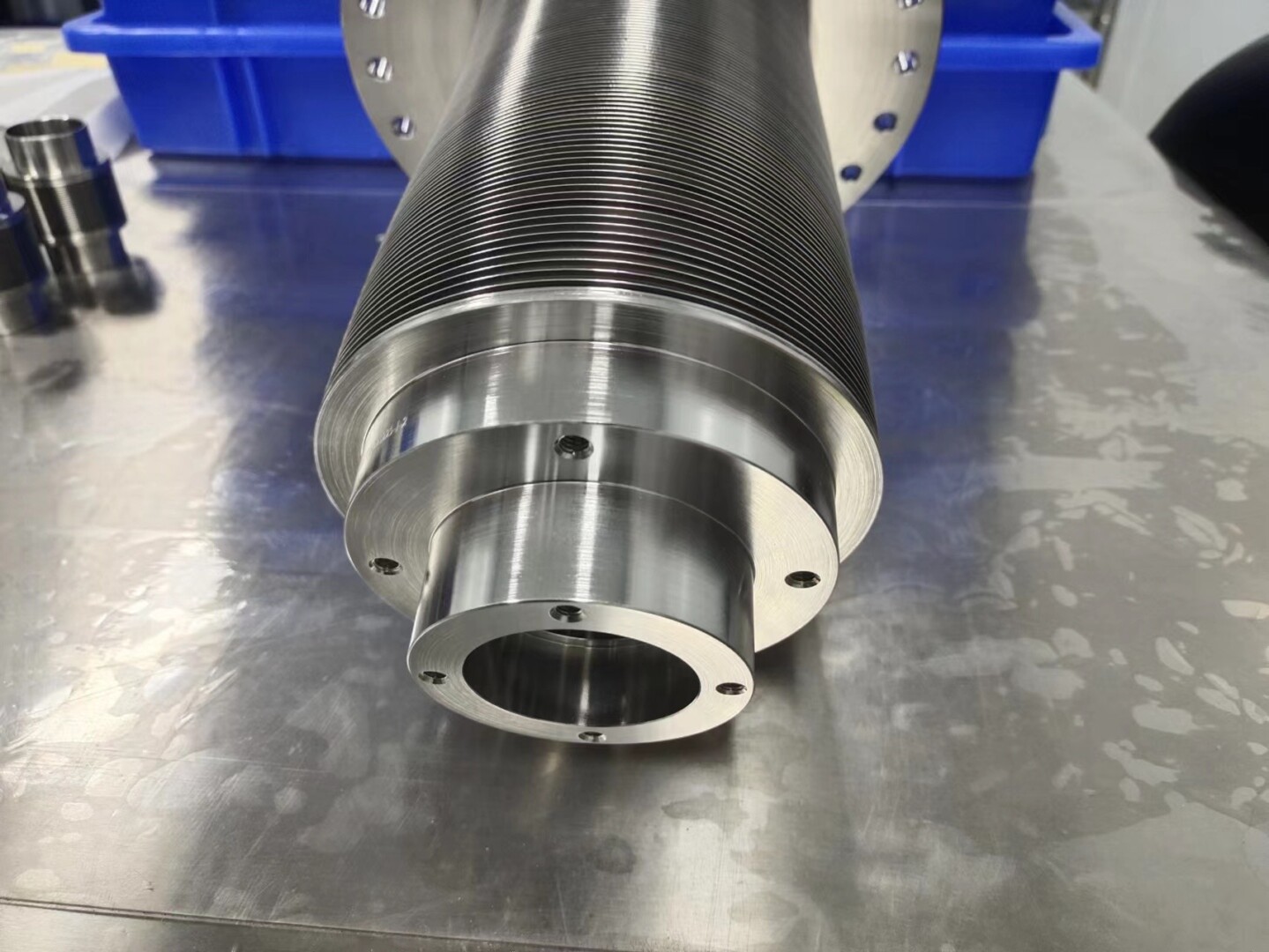
The plasma burns inside a vacuum vessel that must hold 10-6 to 10-7 mbar before plasma operation, then withstand neutron heating, magnetic forces and thermal cycling. Compact designs put the first wall millimeters from a burning plasma — vacuum quality and materials traceability are not optional. The vessel, ports and diagnostics all rely on the same hardware family ITER’s scale does, but in a much tighter envelope: edge welded bellows for ports and bellows-sealed valves, vacuum feedthroughs for diagnostics and power, and helium leak testing on every weld, as described in our leak testing guide.
2. HTS magnets mean cryogenics next to the vacuum vessel
SPARC’s HTS magnets operate at 20 K — far warmer than the 4.5 K of ITER’s niobium-tin magnets, which is exactly the point. But that still means the vacuum vessel sits inside a cryostat, with cryogenic feedthroughs, bellows and thermal isolation between the 20 K magnet structure and the plasma-side hardware. The differential thermal contraction between 20 K and 1,000 K-class plasma-facing components is absorbed by engineered bellows and expansion joints — the same discipline as our cryogenic thermal cycling guide, applied at tokamak scale.
3. Fueling, exhaust and pumping
Fusion fuel — deuterium and tritium — enters as gas, and the tokamak must exhaust helium ash and unburned fuel continuously. SPARC-class machines rely on cryopumps and turbomolecular pumps, large gate valves, and fast-shutter systems, all sealed with metal bellows and gaskets because elastomers cannot survive the radiation environment near a burning plasma. The compact envelope also means valves and bellows are specified for higher cycle counts than in research tokamaks — a production-machine requirement, not a laboratory one.
What $1B Buys in Vacuum Engineering
The new capital accelerates the assembly of SPARC’s components and the build-out of its HTS magnet production line. For the vacuum supply chain, the interesting signal is volume: CFS plans not one SPARC but a fleet of ARC-class power plants after it, and it has said it intends to build them at manufacturing scale. That means thousands of bellows, feedthroughs and valves per reactor, each with full documentation — the same production discipline we analyzed for pulsed-power fusion hardware and TAE’s commercial plant design.
Testing Before First Plasma
Before SPARC ever burns plasma, its vacuum systems will be proven on the ground: vessels leak tested to 10-9 mbar·L/s, magnet systems cycled cryogenically, and the fueling/exhaust loops run in integrated test stands. For every component that means serialized leak reports, material certifications and cleanroom assembly records — the framework in our helium leak testing guide and material guide. Fusion buyers are among the most demanding in the industry precisely because a leak in a tritium loop is not a maintenance event — it is a regulatory event.
Alpha Technology for Fusion Vacuum Systems
Alpha Technology supplies custom edge welded bellows, vacuum feedthroughs and formed bellows for tokamak and fusion supply chains — radiation-tolerant alloys, 100% helium leak tested with serialized reports, cleanroom assembled, and qualified for high-cycle actuation. We work with research labs, integrators and component OEMs on both demonstration machines and the reactor fleets that follow. Contact our engineering team with your pressure, temperature and cycle requirements.
FAQ
What is SPARC?
SPARC is Commonwealth Fusion Systems’ compact tokamak — about 1/65th the volume of ITER — designed to demonstrate scientific breakeven using high-temperature superconducting magnets.
Why does a fusion reactor need vacuum systems?
The plasma burns in an ultra-high-vacuum vessel, magnets run in a cryostat, and fueling/exhaust loops require vacuum pumping and sealing — all with metal seals because elastomers cannot survive the environment.
What vacuum level does a tokamak vessel need?
Before plasma operation, tokamak vessels are pumped to 10-6 to 10-7 mbar; component acceptance leak rates are typically 10-9 mbar·L/s or better.
When will SPARC reach breakeven?
CFS expects SPARC to achieve scientific breakeven in 2027, supported by the $1B raise announced in August 2026.
Qualifying vacuum components for fusion hardware? Contact Alpha Technology with your specification for documented, high-cycle fusion-grade components.