
In June 2026, Atom Computing announced the industry’s first complete quantum error correction demonstration based on the toric code — a milestone for fault-tolerant quantum computing. In July, QuEra detailed its Hyperion roadmap at ISC High Performance 2026, projecting neutral-atom systems toward fault-tolerant operation. The neutral-atom route to quantum computing — arranging laser-cooled atoms in optical tweezers — is suddenly one of the hottest tracks in the field, and it runs on precision vacuum.
Unlike superconducting qubits, which live inside dilution refrigerators at 10 millikelvin (the subject of our article on UHV components inside a dilution refrigerator), neutral atoms are trapped by light in room-temperature vacuum chambers. But ‘room temperature’ is the whole engineering point — and the vacuum requirements are stricter than many people realize.
Why Neutral-Atom Qubits Need Vacuum at All
1. Atomic lifetimes depend on pressure
A rubidium or cesium atom trapped in optical tweezers stays in the trap until a background gas collision kicks it out. The trap lifetime scales inversely with pressure: at 10-10 mbar, atom lifetimes reach many seconds to minutes; at 10-8 mbar, they collapse to milliseconds. Long coherence times — the currency of quantum computing — require UHV chambers with low outgassing and no leaks. Every feedthrough and window in the chamber must be vacuum-baked and leak certified; the discipline is identical to what we describe in helium leak testing for UHV components.
2. Optical access is a vacuum engineering problem
Neutral-atom machines use dozens to hundreds of laser beams to trap, cool, image and manipulate atoms. Each beam crosses the vacuum boundary through an anti-reflection-coated window, and the window must stay clean and strain-free for years. Viewports, laser feedthroughs and the mechanical mounts that hold them are precision UHV components — a leak at any window ruins the chamber.
3. Atomic sources and atomic flux
Atoms are loaded from dispensers or ovens that sit inside the vacuum envelope. The chamber design must let atoms in, keep the pressure low, and vent excess flux to pumps — a careful balance of conductance and pumping speed that is the essence of UHV system engineering.
Scaling Past 1,200 Qubits
Scaling from demonstration arrays to commercial systems is happening in stages: Atom Computing and QuEra have already crossed 1,200 physical qubits, and the next milestones are logical qubits — groups of physical qubits running error correction with reasonable overhead. The toric-code demonstration in June 2026 is significant precisely because it shows the physical layer is stable enough to build on: the vacuum chambers held pressure, the tweezers held atoms, and the error rates stayed low long enough to complete the correction cycle. For hardware suppliers, that is the signal that the market is real — systems are being built, not just demonstrated.
Vacuum System Architecture for Atomic Arrays
A commercial neutral-atom system typically contains: a main UHV chamber (10-10 mbar) where the atom arrays form, a loading chamber connected by a gate valve, ion pumps, NEG pumps and titanium sublimation pumps, plus a dozen or more viewports and dozens of electrical and optical feedthroughs. The mechanical frame holding optics is often integrated with the chamber — bellows between chamber and laser tables allow alignment. The bill of materials reads like a high-end research UHV system, but the volume is industrial.
Room-Temperature Hardware, UHV Discipline
Atom Computing and QuEra already operate 1,200+ physical qubit systems, and the scaling roadmap (larger tweezer arrays, zone architectures, interconnects) multiplies the vacuum surface area: bigger chambers, more windows, more feedthroughs, more bellows-sealed mechanisms. Each new generation is a new UHV build. The vacuum industry benefit is direct — the same edge welded bellows, vacuum feedthroughs and viewport hardware used in cold-atom physics labs for decades is now being ordered at commercial volumes.
What Commercial Neutral-Atom Hardware Needs
- UHV chambers with minimal outgassing: 316L and aluminum bodies, vacuum-fired and baked; the material guide explains the alloy logic.
- High-density feedthroughs: dozens of electrical and optical paths through one flange; multipin and optical vacuum feedthroughs qualified for bakeout to 200-400 °C.
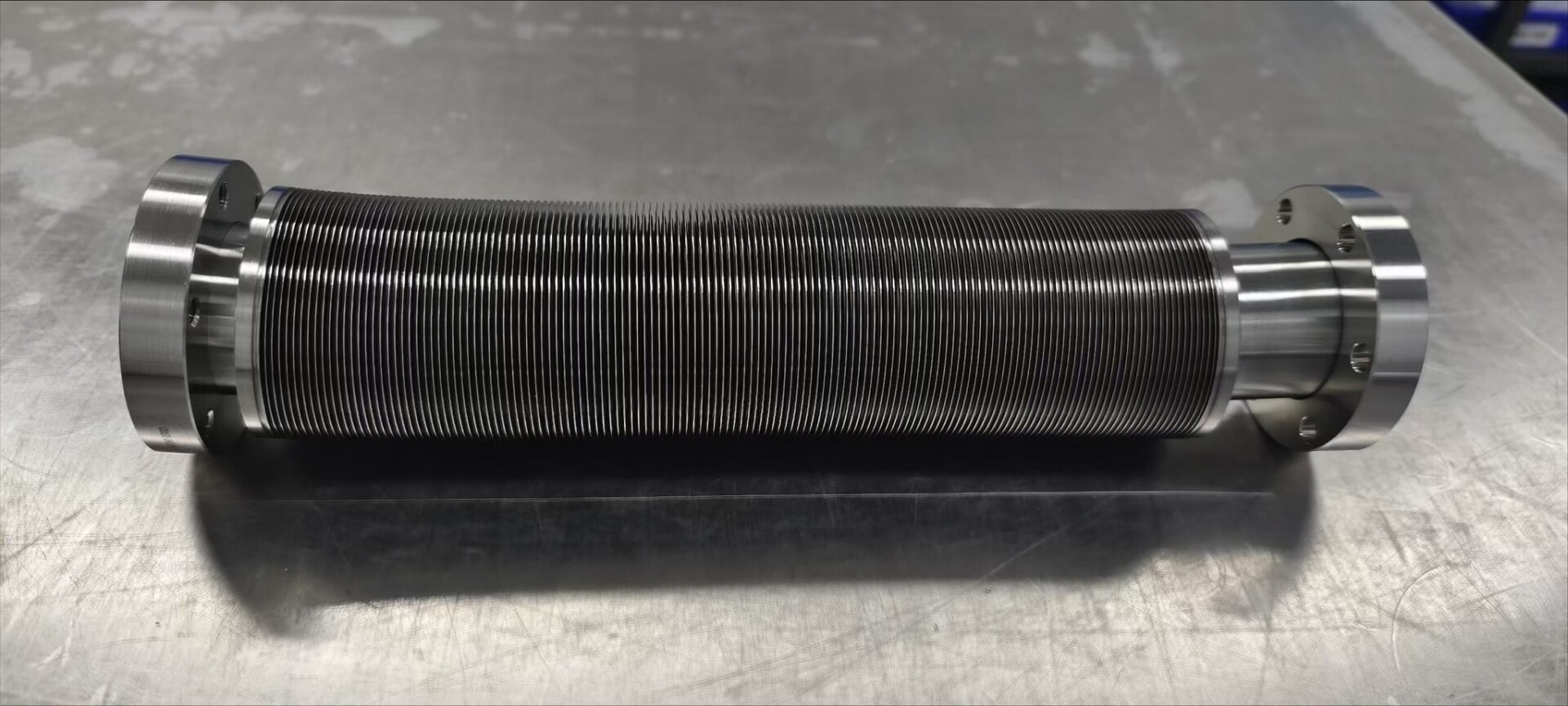
- Bellows for alignment and motion: edge welded bellows let experimenters align windows and components in situ while keeping the UHV seal.
- Documented quality: serialized leak reports and material traceability, because a quantum computer’s operating life depends on a chamber that never leaks.
Room-Temperature Hardware, UHV Discipline
The marketing contrast — ‘no cryostat needed’ — hides the real engineering: neutral-atom systems trade a cryostat for an extremely demanding UHV chamber. Outgassing rates, leak integrity and cleanliness matter as much as they do in the dilution-refrigerator world covered in our article on logical qubits and cryostat vacuum hardware. For suppliers, the lesson is the same across quantum modalities: the quantum industry buys vacuum components the way fabs do — documented, tested, and clean.
Alpha Technology for Quantum Vacuum Systems
Alpha Technology builds custom edge welded bellows, vacuum feedthroughs and UHV chambers and components for cold-atom, neutral-atom, ion-trap and photonic quantum systems — vacuum-fired, baked, 100% helium leak tested with serialized reports. Contact our engineering team with your chamber, viewport and pressure requirements.
FAQ
What is a neutral-atom quantum computer?
A quantum computer that uses laser-cooled neutral atoms (like rubidium or cesium) arranged and manipulated in optical tweezers — light traps that hold individual atoms.
Why don’t neutral-atom qubits need a cryostat?
The atoms are cooled and trapped by lasers rather than by refrigeration; the qubits live at room temperature inside an ultra-high-vacuum chamber.
What vacuum level do neutral-atom machines need?
Long atomic trap lifetimes require UHV at 10-10 mbar or better, with low-outgassing materials and leak-certified windows and feedthroughs.
What is the toric code milestone?
In June 2026 Atom Computing demonstrated a complete quantum error correction cycle based on the toric code — a key step toward fault-tolerant quantum computing.
Building a quantum vacuum system? Contact Alpha Technology for UHV chambers, feedthroughs and bellows qualified to your pressure and bakeout specification.