
On July 21, 2026, researchers at UC Riverside and the LIGO Scientific Collaboration announced a new infrared thermal-imaging technique that reduces thermal distortion in LIGO’s mirror coatings, lifting detector sensitivity by up to 31% — a major step toward the A+ upgrade goals of the next observing run (O5). Days earlier, on April 23, 2026, LIGO-India broke ground on its new observatory, expanding the global network that already includes Hanford, Livingston, Virgo and KAGRA, while Germany’s GEO600 detector prepares to end operations on December 31, 2026. The stated goal for the next generation of instruments: roughly ten times today’s sensitivity.
These milestones are usually reported as stories about lasers and mirrors. But a gravitational wave detector is, at its core, one of the largest vacuum systems ever built. LIGO’s two 4-kilometre arms are ultra-high-vacuum beam tubes pumped to about 10-9 mbar, and almost every sensitivity improvement of the past decade — squeezed light, better coatings, lower thermal noise — has been bought with vacuum discipline.
The 4-km Vacuum Envelope
Why the tubes must be nearly empty
Laser light travels each 4 km arm roughly 280 times before interfering, so a single stray gas molecule can scatter light that has effectively travelled thousands of kilometres. At 10-9 mbar, the residual gas density is low enough that light scattering becomes negligible — but reaching and holding that pressure along 8 km of buried tube demands powerful ion pumps, getters and cryogenic pumping at the end stations.
Bellows: the joints that keep the vacuum (and the science) intact
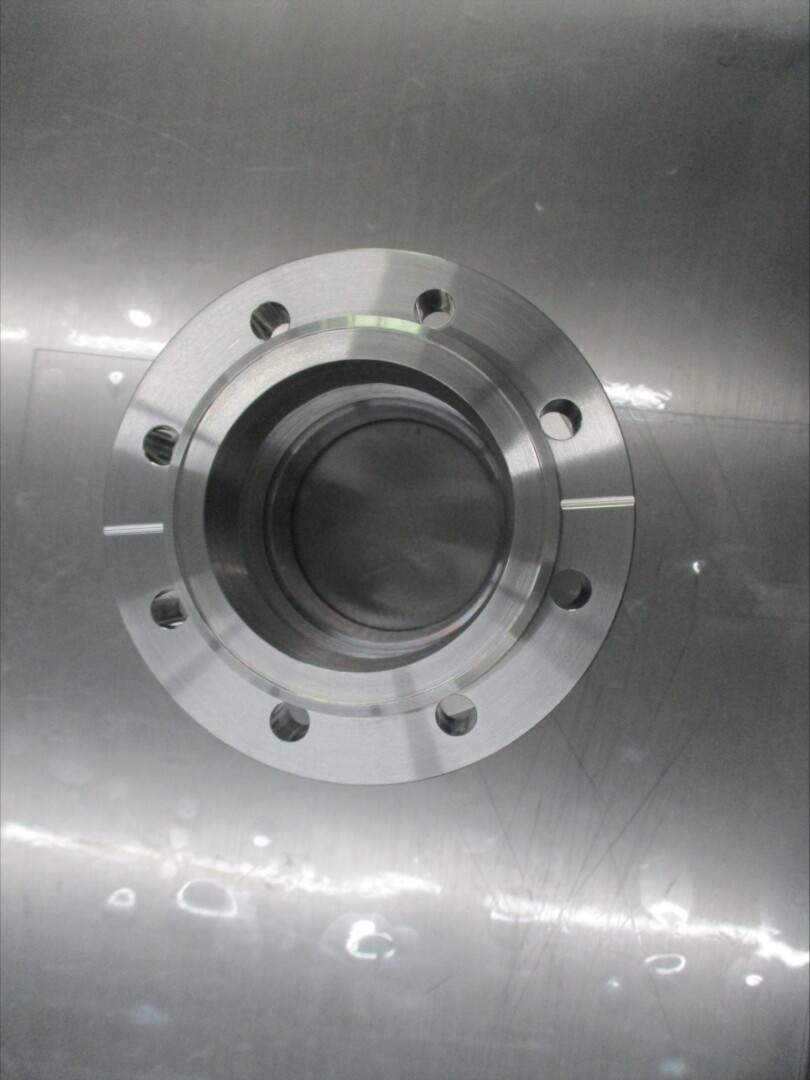
Between rigid tube sections, at the end-station interface and around the mirror chambers, welded metal bellows absorb ground motion, thermal expansion and the deliberate articulation of the detector geometry. The same components appear in a smaller form inside the suspension systems and vacuum enclosures that isolate each test mass. A bellows here is not plumbing — it is a mechanical spring that must flex without letting vibration reach a mirror whose position is measured to 10,000th of a proton’s width. That is precisely the balance of edge welded bellows: leak-tight metal walls with controlled spring rates and high cycle life.
Why Sensitivity Is a Vacuum Question
Every term in a gravitational wave detector’s noise budget has a vacuum dimension:
- Scattered light noise — driven by residual gas density and by surface contamination inside the beam tubes; both are vacuum problems.
- Coating thermal noise — the 2026 thermal-imaging technique attacks mirror heating, but heating is worsened by any residual gas conducting heat to the optics.
- Mechanical noise — vacuum pumps must be vibration-isolated, typically with bellows and damping mounts, or their ripple couples into the mirrors.
- Pressure stability — index-of-refraction fluctuations from pressure drift create phase noise in the interferometer; stable UHV is phase stability.
The helium leak testing that qualifies a semiconductor chamber at 1×10⁻⁹ mbar·L/s is the same qualification a beam tube section must pass before it is welded into the arm.
Building and Rebuilding the Beam Tubes
Each LIGO arm is assembled from hundreds of 1.2-metre-diameter stainless steel tube sections, welded together in the field and pumped down in segments. The practical challenges are engineering classics: welding thin-wall tubes without distortion, keeping particles out during installation, and protecting the internal surface finish so that scattered light stays low for decades. Every end station adds a separate vacuum domain — the mirror chambers, the mode cleaner, the beam splitter enclosure — each with its own pump stack, valves and diagnostics, isolated from the arm tubes by gate valves and bellows that must open and close without disturbing alignment. When the A+ upgrade swaps mirrors and suspension hardware, the vacuum envelope opens and re-closes around them, which is why every flange and seal on the detector is treated as a consumable with documented re-torque and leak-check procedures.
The Road to O5 and LIGO-India
The network’s next observing run will add LIGO-India’s detector to the array, improving sky localization dramatically. The build-out duplicates the UHV infrastructure of the US sites: kilometres of beam tube, dozens of end-station chambers, hundreds of bellows and feedthroughs, and the vacuum instrumentation to keep them at operating pressure. For suppliers, each observatory represents the same component vocabulary as a large accelerator or fusion machine — which is why the vacuum lessons from CERN’s accelerator complex transfer directly to gravitational wave astronomy.
The Alpha Technology Angle
Alpha Technology manufactures custom edge welded bellows, vacuum feedthroughs and sealed assemblies for UHV science facilities — from synchrotrons to quantum and cryogenic systems. Our bellows ship with documented spring rates, fatigue life and helium leak test records, qualified for the same vacuum discipline that runs an observatory. Contact our engineering team to discuss your beam line or detector hardware.
FAQ
What vacuum level does LIGO use?
LIGO’s 4 km beam tubes operate near 10-9 mbar, achieved with ion pumps, getters and cryogenic pumping at the end stations.
Why are bellows used in gravitational wave detectors?
Welded metal bellows connect rigid tube sections and isolate end-station chambers, absorbing thermal expansion and ground motion without transmitting vibration to the mirrors.
How did the 2026 A+ upgrade improve sensitivity?
A new infrared thermal-imaging technique reduces thermal distortion in the mirror coatings, cutting coating thermal noise and lifting sensitivity by up to 31%.
What is the next gravitational wave milestone?
LIGO-India broke ground in April 2026 and joins the O5 observing run, improving sky localization across the Hanford–Livingston–Virgo–KAGRA network.
Building UHV hardware for an observatory, accelerator or research chamber? Contact Alpha Technology for leak-tested, documented vacuum components.