
On July 13, 2026, Intel announced a €5 billion investment to expand its Irish foundry Fab 34 at Leixlip, engaging 2,000 specialised tradespeople and adding leading-edge EUV-based manufacturing for the Intel 3 process node — the company’s pivot after cancelling its greenfield Magdeburg megafab in Germany. Meanwhile TSMC’s European joint venture ESMC is moving equipment into its Dresden fab, targeting high-volume automotive chip production on 28/22nm and 16/12nm by late 2027, and TrendForce reported on July 17, 2026 that Intel’s abandoned German site may be taken over by memory startup FMC. Europe’s semiconductor map is being redrawn — and every square metre of cleanroom is a vacuum system.
Deposition, etch, EUV exposure and metrology tools all operate at vacuum or in controlled atmospheres. A fab is, in the words of many tool engineers, a building full of vacuum machines. The European build-out is therefore as much a supply chain story for vacuum pumps, chambers, valves, feedthroughs and bellows as it is for lithography and capital spending.
The New Map of European Manufacturing
Intel Fab 34, Leixlip (Ireland)
The €5 billion expansion adds Intel 3-class EUV capacity to the existing facility, which already operates some of Europe’s most advanced logic manufacturing. EUV tools are among the most vacuum-intensive machines ever built: the exposure chamber operates in UHV, and the wafer handling environment is particle-controlled to extreme degrees (see our High-NA EUV vacuum hardware article).
TSMC ESMC, Dresden (Germany)
The Dresden joint venture serves European automotive and industrial customers with mature and specialised nodes. Equipment move-in through 2026 and high-volume ramp in 2027 means thousands of vacuum chambers, etch modules, ALD tools and metrology systems entering Europe in a single wave — the same dynamic we analysed for the $920B US semiconductor investment.
Every Node Is a Vacuum Machine
Whatever the process node, the vacuum content is roughly constant:
- Deposition (PVD, CVD, ALD) — process chambers held at 10-3 to 10-8 mbar with precision gas and plasma control.
- Etch — plasma chambers where the same vacuum walls must survive aggressive chemistries and thousands of wafer cycles.
- EUV and lithography — UHV exposure chambers plus the UHV-compatible components that keep optics clean.
- Metrology and inspection — electron-beam and optical systems with column vacuum and precision stages.
- Wafer handling and transport — bellows-sealed robot arms, slit valves and load locks between atmospheric and vacuum environments.
Each tool contains dozens of bellows, feedthroughs and seals. The industry-level demand math mirrors the $8.9 billion vacuum equipment market we reviewed in an earlier analysis: more fabs, more tools, more vacuum hardware per square metre of cleanroom.
Vacuum Equipment by the Numbers
To see why the fab build-out matters for component suppliers, run the arithmetic on a single tool: a modern etch or deposition module uses 15–40 welded bellows in its valves, isolators and wafer-handling mechanisms; 10–30 feedthroughs for RF power, sensors and motion; plus gaskets, viewports and gauges. A megafab operates hundreds of such tools, and a €5 billion expansion like Intel’s adds multiple cleanroom levels. Scaling from the 2026 vacuum equipment market forecast — roughly $8.9 billion globally, growing faster than fab capex — the European wave alone represents thousands of bellows and feedthroughs per quarter entering service, each needing qualification against the same helium leak testing and cleanliness standards. That is the supply chain reality behind the headlines: Europe is not just buying lithography systems, it is buying tens of thousands of precision vacuum components.
The Vacuum Supply Chain Question
Europe’s challenge is not demand — it is qualified supply. Local toolmakers such as ASML, Aixtron and SUSS anchor an ecosystem, but UHV components still travel long distances, and fab ramp schedules punish long lead times. The buyers best positioned through 2026–2027 are those who:
- Qualify welded bellows and feedthroughs early, against documented helium leak test records rather than paper specs;
- Dual-source critical vacuum hardware to hedge the same capacity squeeze hitting every fab region; and
- Specify custom bellows specifications with cycle life and cleanliness requirements in writing.
The Alpha Technology Angle
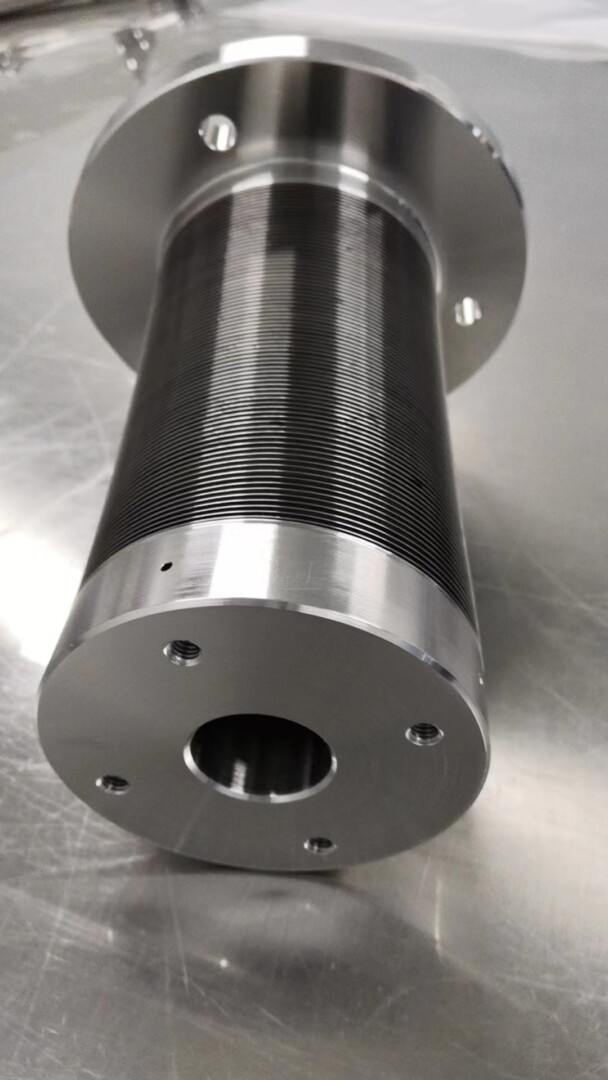
Alpha Technology supplies edge welded bellows, vacuum feedthroughs and sealed assemblies to semiconductor equipment manufacturers and end users across Europe — components qualified for UHV, bake-out and high-cycle service, each shipped with material certifications and leak test documentation. Contact our engineering team to align your vacuum component supply with your 2026–2027 ramp.
FAQ
What is Intel’s new European investment?
In July 2026 Intel announced €5 billion to expand its Irish Fab 34 at Leixlip with Intel 3 EUV capacity, after cancelling the planned Magdeburg megafab in Germany.
What is TSMC building in Dresden?
TSMC’s ESMC joint venture is equipping a Dresden fab for 28/22nm and 16/12nm automotive and industrial chips, targeting high-volume production by late 2027.
Why is a fab a vacuum supply chain story?
Deposition, etch, EUV and metrology tools all run in vacuum; every fab addition means thousands of chambers, pumps, valves, feedthroughs and bellows entering service.
How should buyers prepare for the European fab ramp?
Qualify vacuum hardware early with documented leak test records, dual-source critical components, and specify cycle life and cleanliness requirements in writing.
Planning vacuum hardware for a fab tool or line? Contact Alpha Technology for documented, qualified bellows and feedthroughs.